
The land that runs forever, still does.
The Maasai word is Siringet. The translators softened it into Serengeti somewhere along the way, but the meaning stayed: the place where the land runs on forever. After a dozen years of putting people into vehicles here, that is still the line we hear back the most. Some of it is the sheer horizontal sweep, the way the plains lie down flat to the curve of the earth and nothing taller than an acacia interrupts. Some of it is the sound of how empty the wind feels, even when there are two hundred thousand wildebeest within a few miles of you. And some of it is the slow surprise that a place that famous is also still that wild.
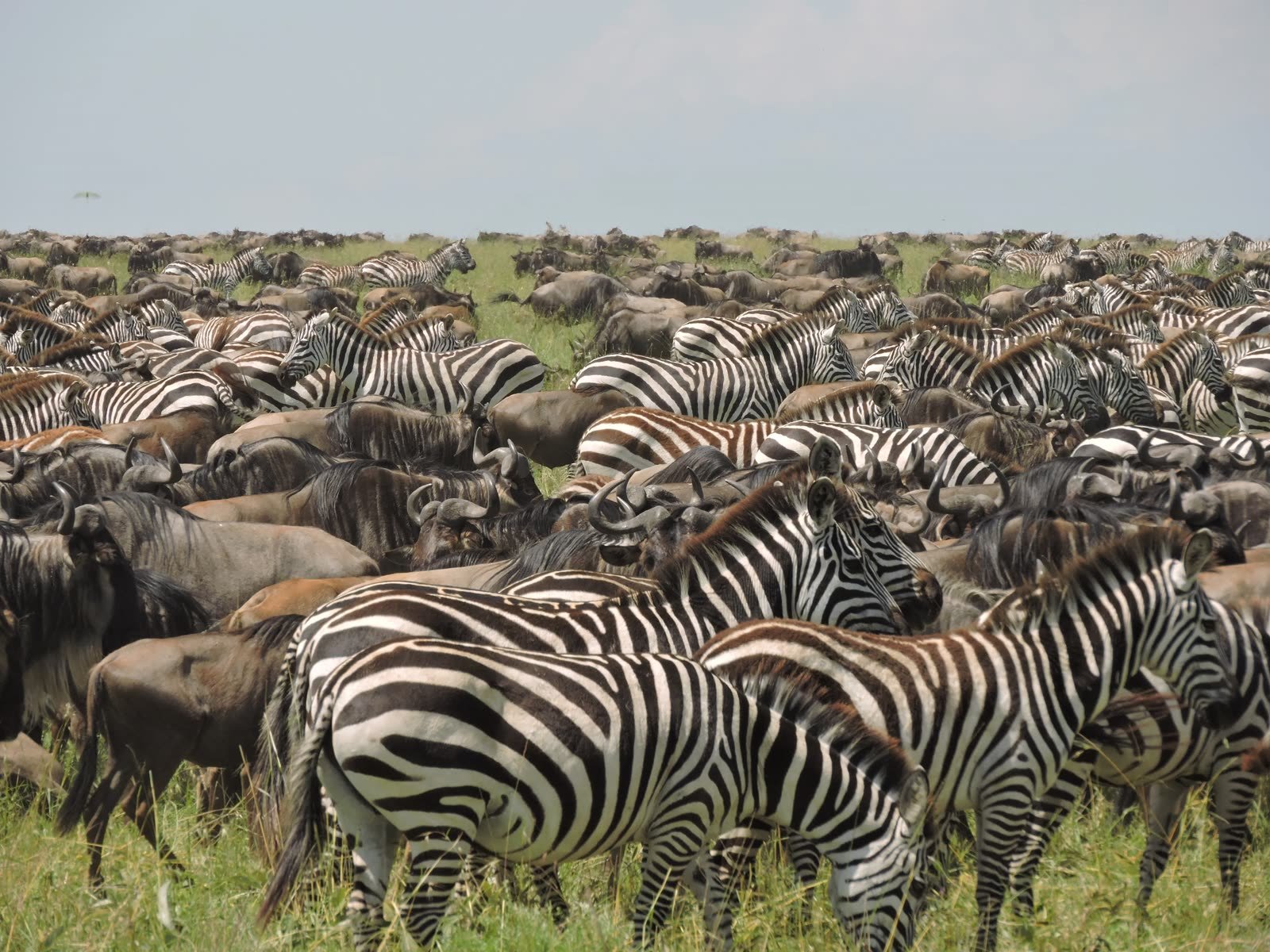
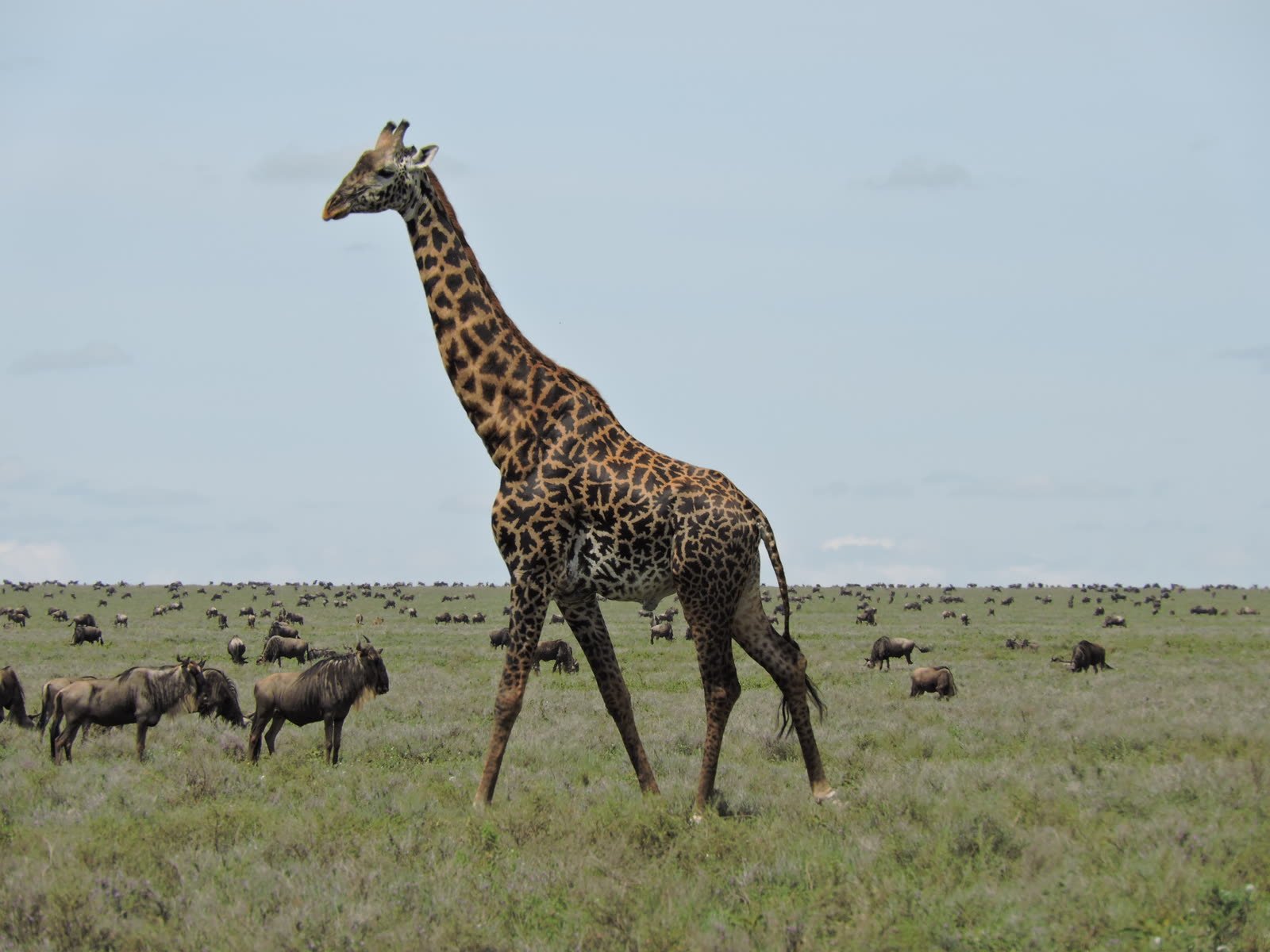
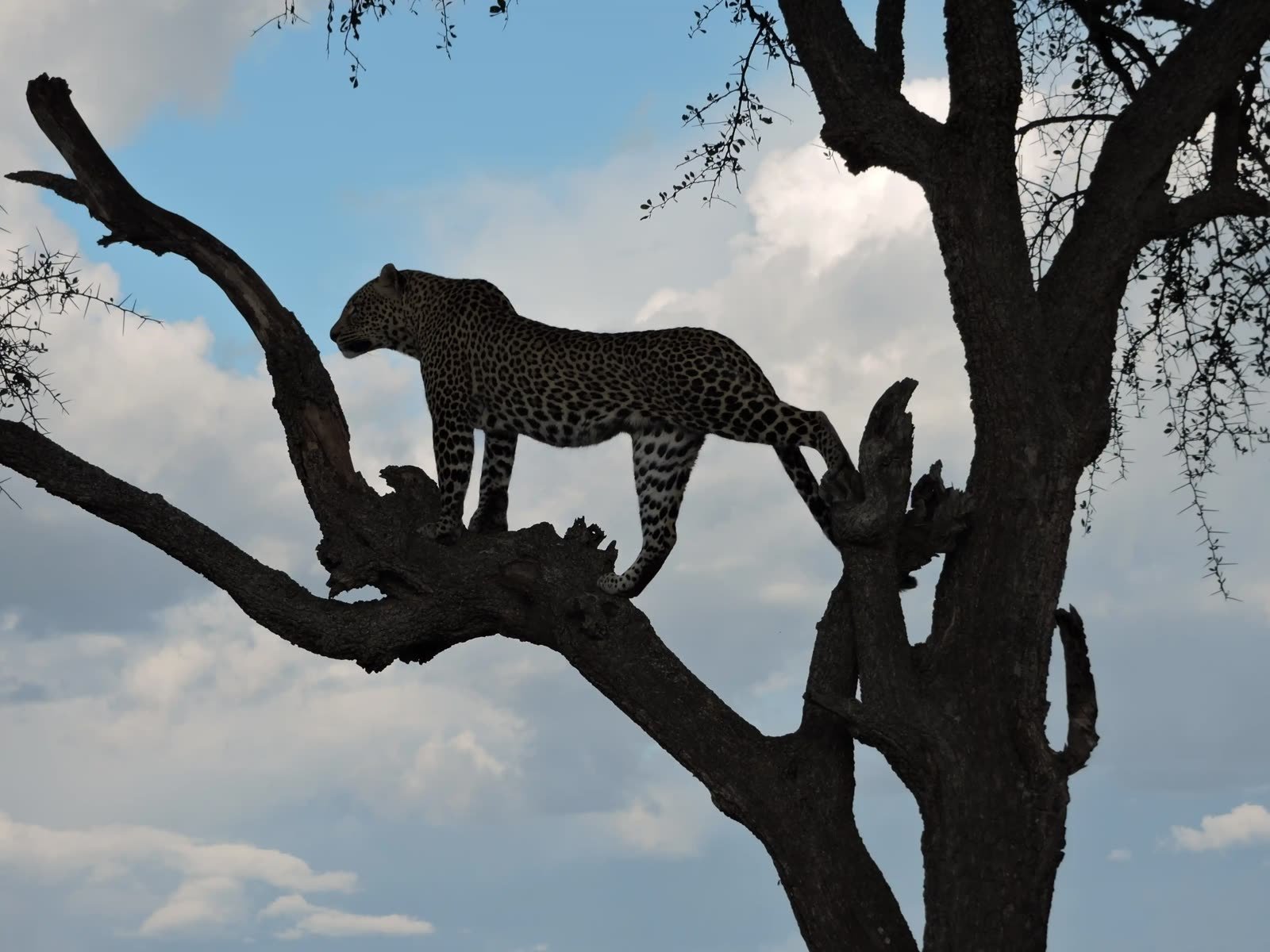
What walks here
Six Serengetis.
This massive park holds six major wildlife zones, where animals capitalise on the resources of each at a different time of the year, between the rains and the dry. The chapters below follow the annual migration of the animals, particularly the wildebeest and the zebra. Where you go depends on the month you travel.
Seronera, Central Serengeti
The resident heart.
The most popular area of the park, with resident animals throughout the year, and the place where two zones meet and overlap. Rivers that never run dry hold lion and leopard here every week of the year, whatever the migration is doing elsewhere. Year-round, peak April to June.
North Serengeti
The crossings.
Mara River, Kogatende, the Lamai Wedge, Wogakuria kopjes, Bologonja and Nyawatembwa. From July the wildebeest and zebra reach the northern corner of the park and face the most challenging crossing of all, the great Mara River, with hunger on one bank and aggressive crocodiles in the water between. From October the herds turn south again through the Lobo Valley and the Bologonja springs: empty rolling hills and wooded valleys carrying big families of elephant and buffalo, and lions resting on the rocks. July to December.
Western corridor
The first river.
Grumeti river, the Mbalageti river and plains, and the Musabi plains: the land mass of the park stretching west toward Lake Victoria. This is the first challenge for that year’s young wildebeest, learning how to escape the crocodiles of the Grumeti. Plenty of hippo, the rare colobus monkey, big troops of baboon, lion and topi. May to June.
Eastern Serengeti
The green quarter.
Sametu kopjes and marsh, Namiri plains, Barafu kopjes and Loliondo. Peak season is green and far less visited, and it stays green through much of the year, with resident lion and leopard and big chances for cheetah. January to April.
Southern plains
The calving.
The Naabi Hill triangle, the Ndutu plains, Hidden Valley and the Kusini plains: this is where the wildebeest babies are born, about a quarter of a million of them inside three weeks. The best chance of the year to see the interaction between predator and prey, lion, cheetah or hyena against the herds. January to April.
South-west, Moru kopjes
The rhino country.
Moru kopjes, Gong rock, the Maasai paintings and the rhino museum. A secluded area, highly protected and monitored because of its rare black rhino population, ringed by kopjes and bordering the extension of the southern plains. One of the few places where you have a chance of finding all of the big five in one area on the same day, and where the rock paintings and other marks left behind tell of the people who occupied the Serengeti long before it became a national park. January to April.
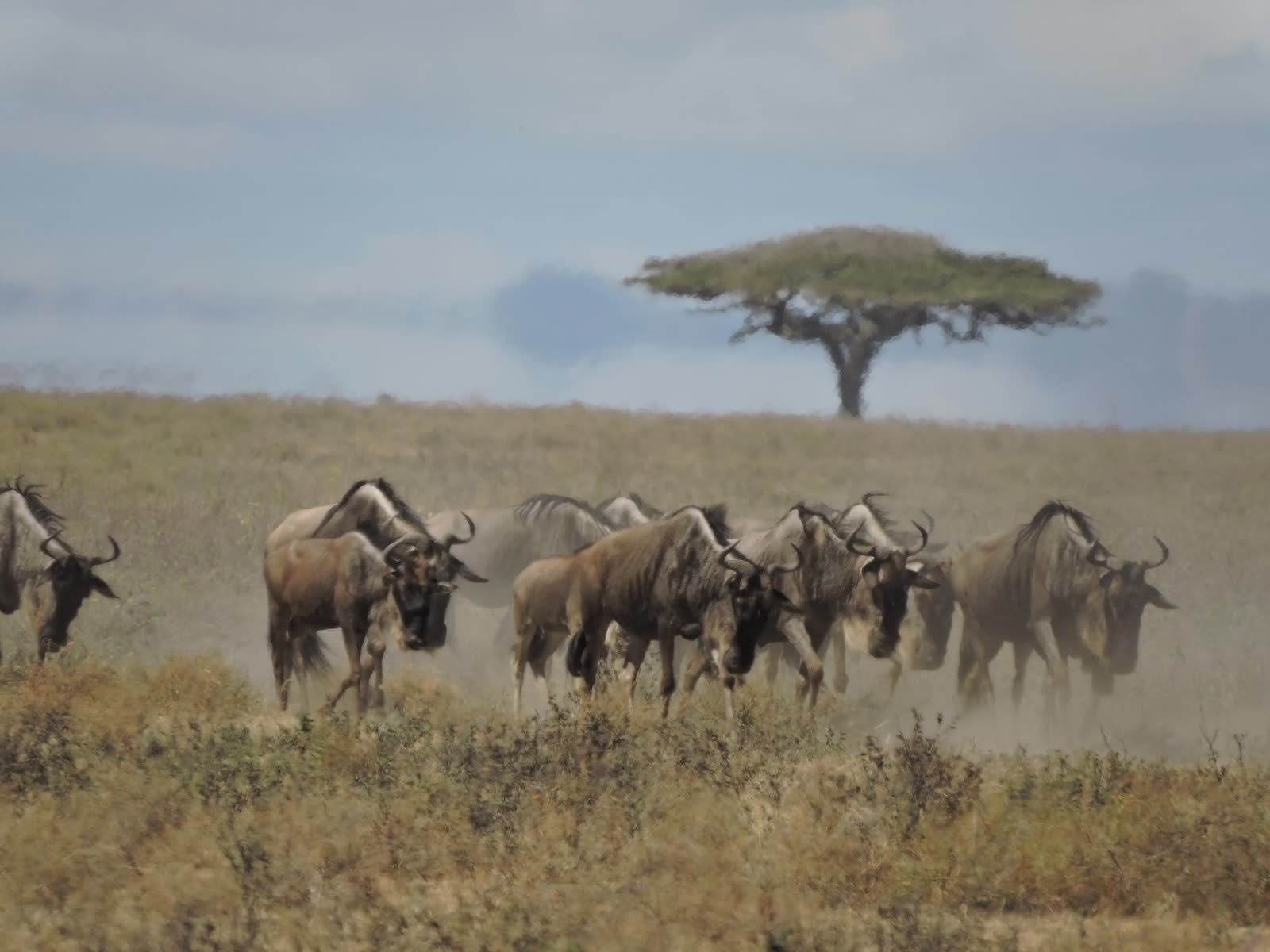
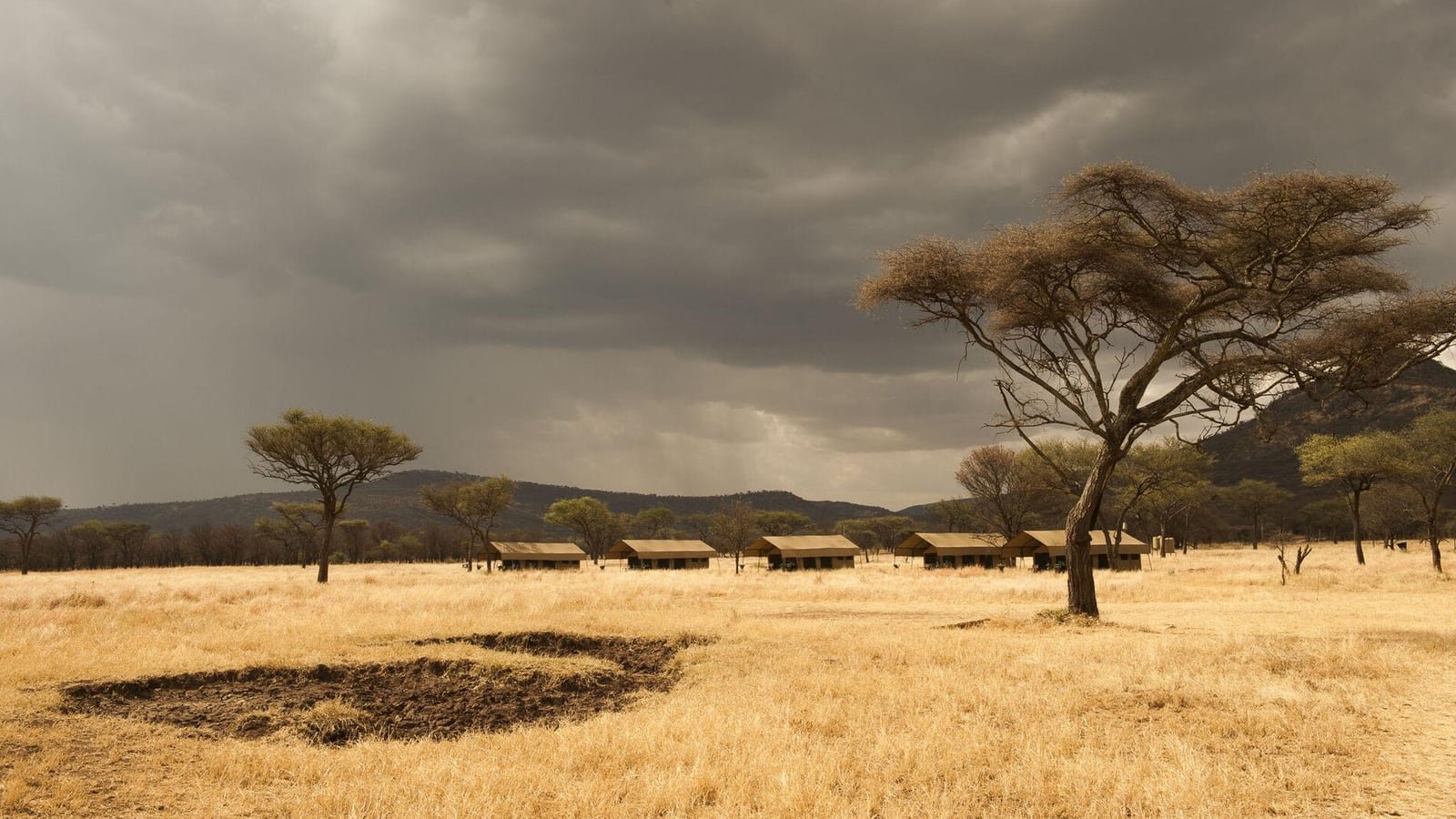
The tree that stands for the park. A lone flat-topped acacia on the open plain, the tree that stands in for the whole Serengeti in most photographs of it.
In detail
The Serengeti, in detail.
Serengeti comes from the Maasai word siringet, which means the endless plains, or the sea of grass. The national park is a massive wilderness covering about 5,700 square miles (14,563 km²), with several habitats that support the variety and the richness of its wildlife: open grassland, woodland, marsh, riverine forest, rivers and lakes, mountains and hills, valleys and creeks, and not to forget the kopjes, the gigantic volcanic and granite rocks that rise out of the plains.
The park is the main engine of the whole ecosystem, one of the most intact ecosystems in the world and one of the least interfered with by people. That greater ecosystem covers about 10,000 square miles, the size of Massachusetts. It is bordered by the Maasai Mara in Kenya to the north, the Loliondo Game Controlled Area on the eastern side, the Ngorongoro Conservation Area to the south, the Maswa Game Reserve to the south-west, and the Grumeti and Ikorongo Game Reserves to the west, with Lake Victoria at the far end of the western corridor.
The animals move freely because there are no boundaries between any of it and no fences anywhere. That is what sustains the largest migration of ungulates still on earth today: more than two million animals moving annually, in a clockwise direction, in a constant search for water and fresh grass.
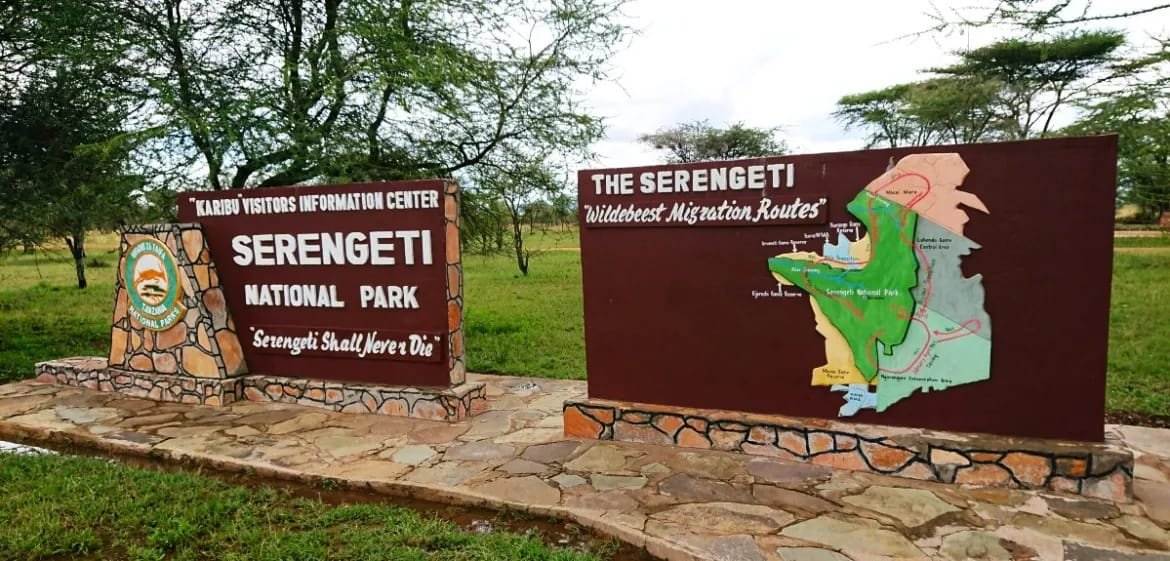
The board at the visitors’ centre. It reads Serengeti shall never die, and beside it is the clockwise loop the herds have walked since long before anyone drew it.
Where you can stay
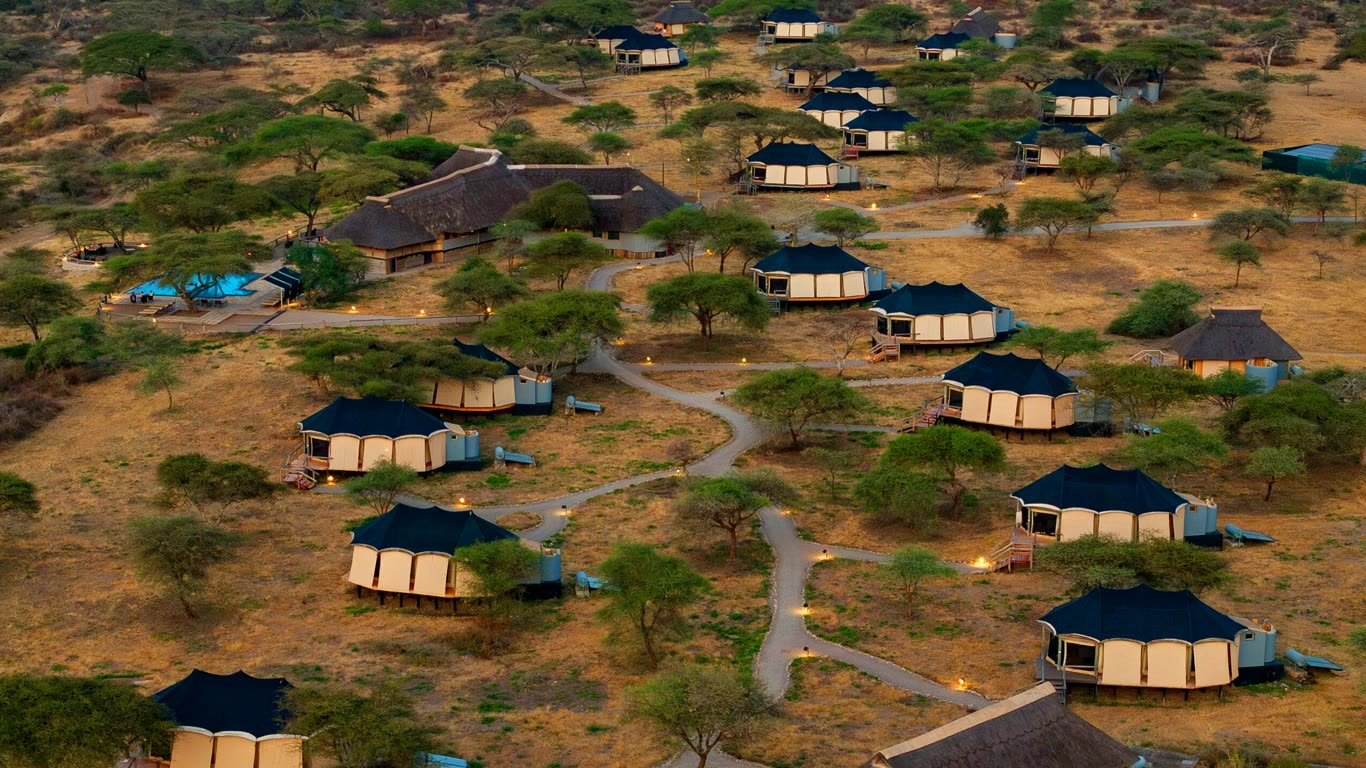
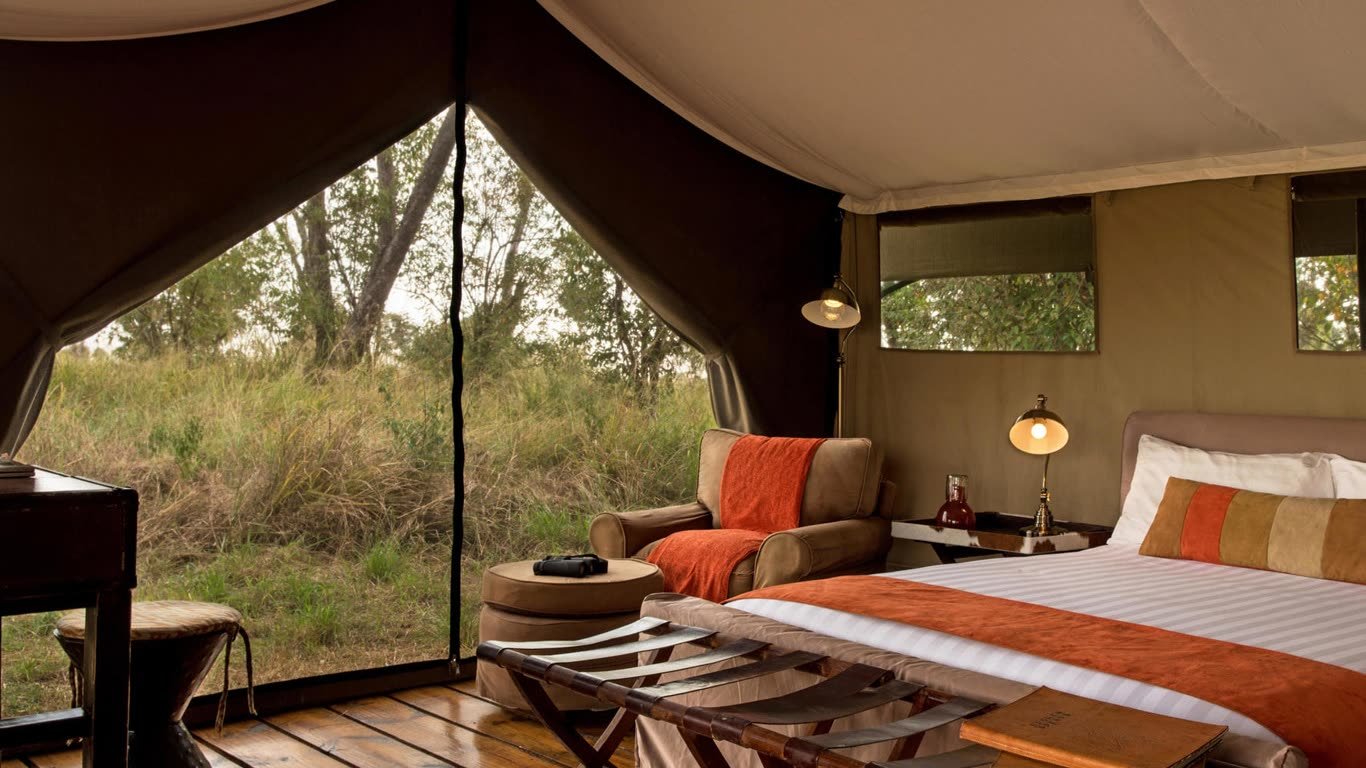
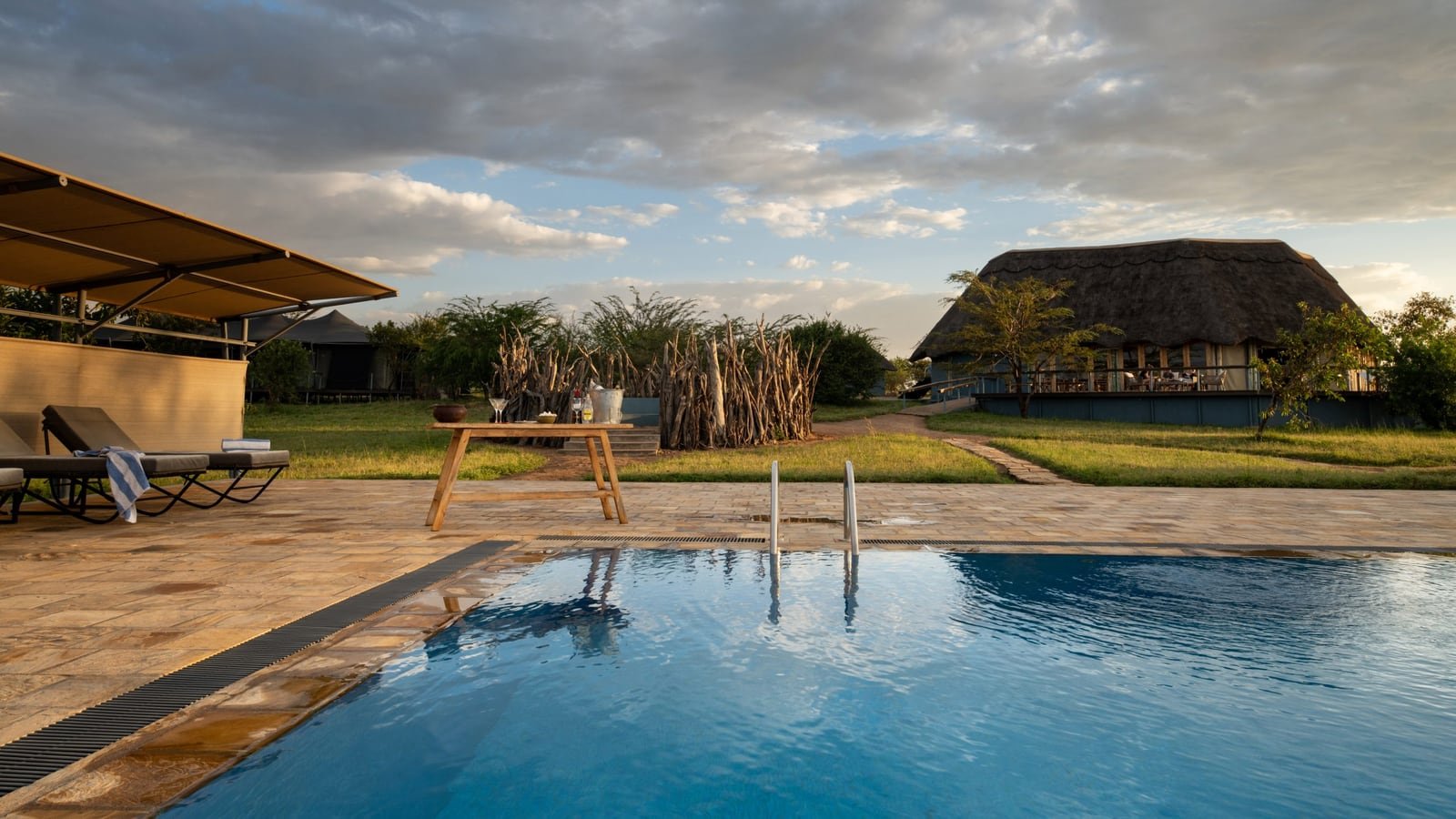
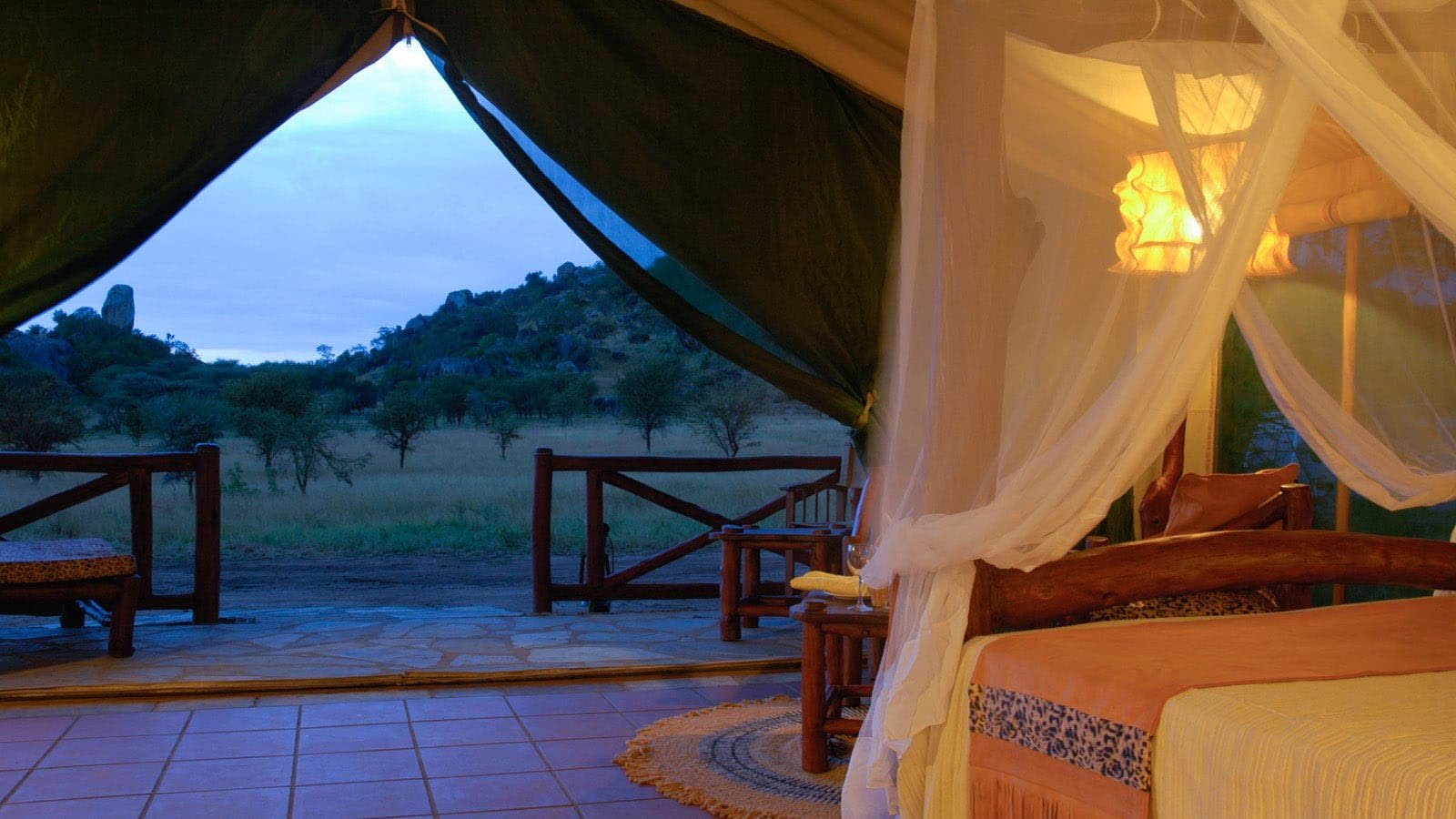
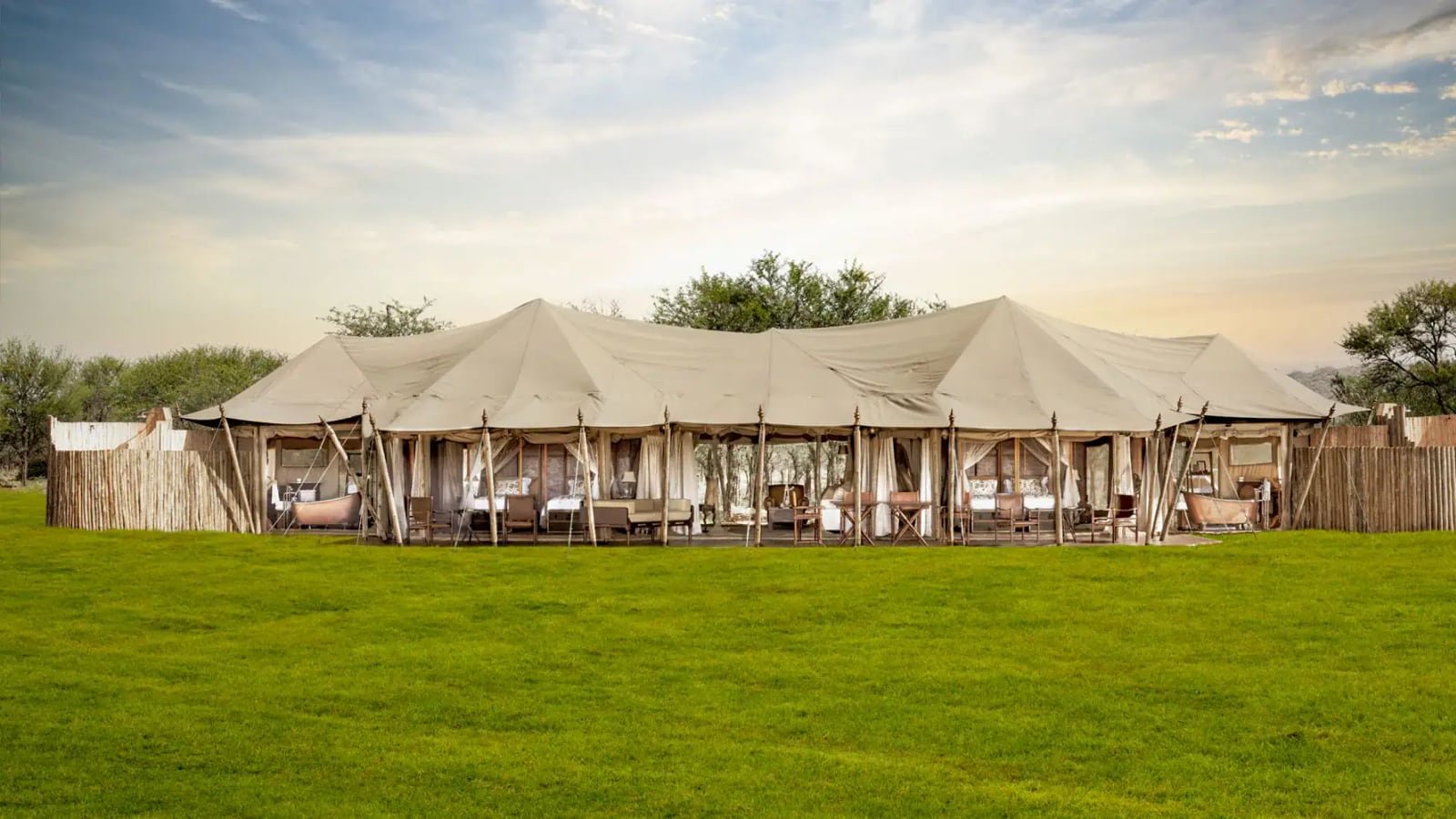
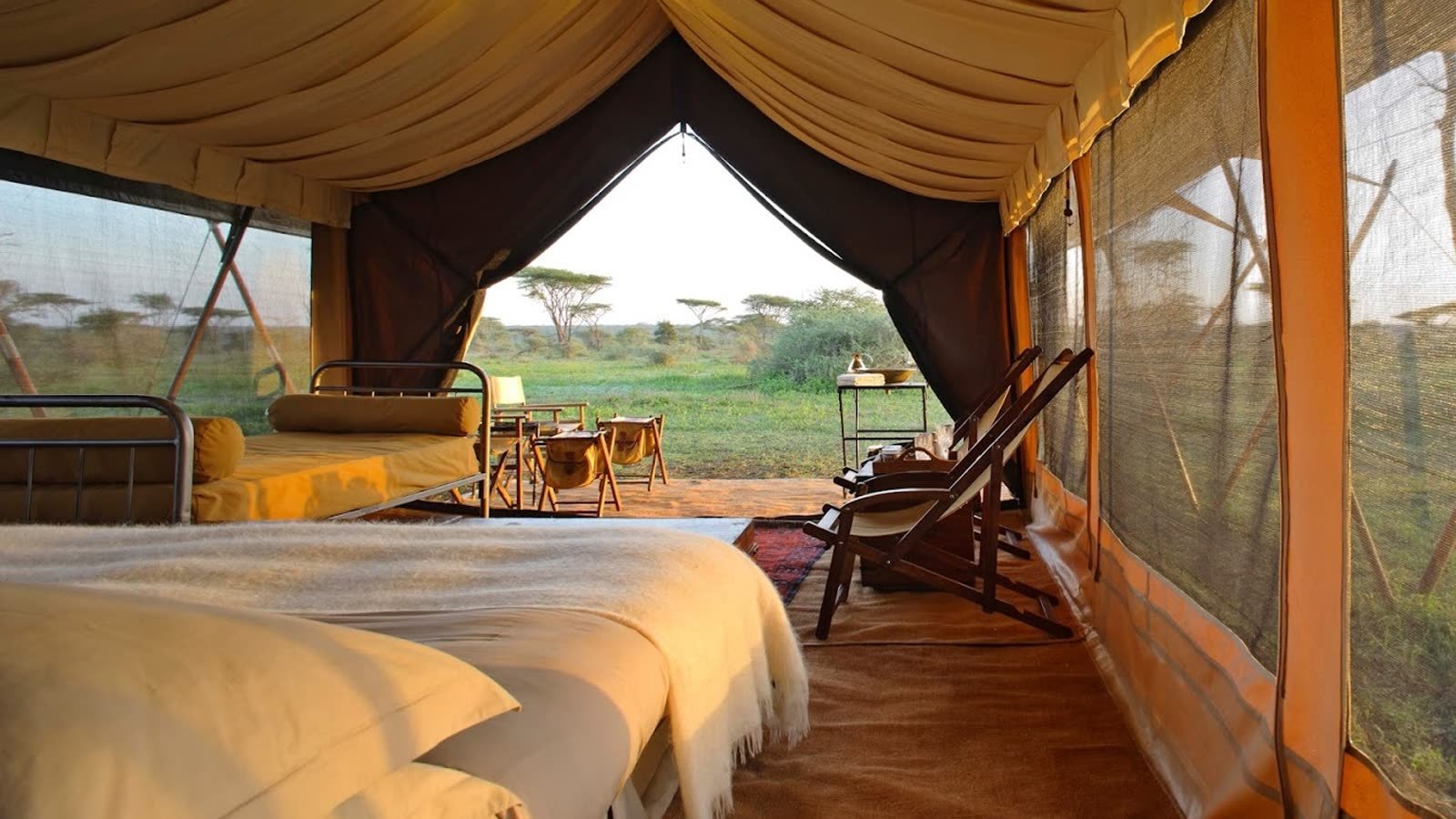
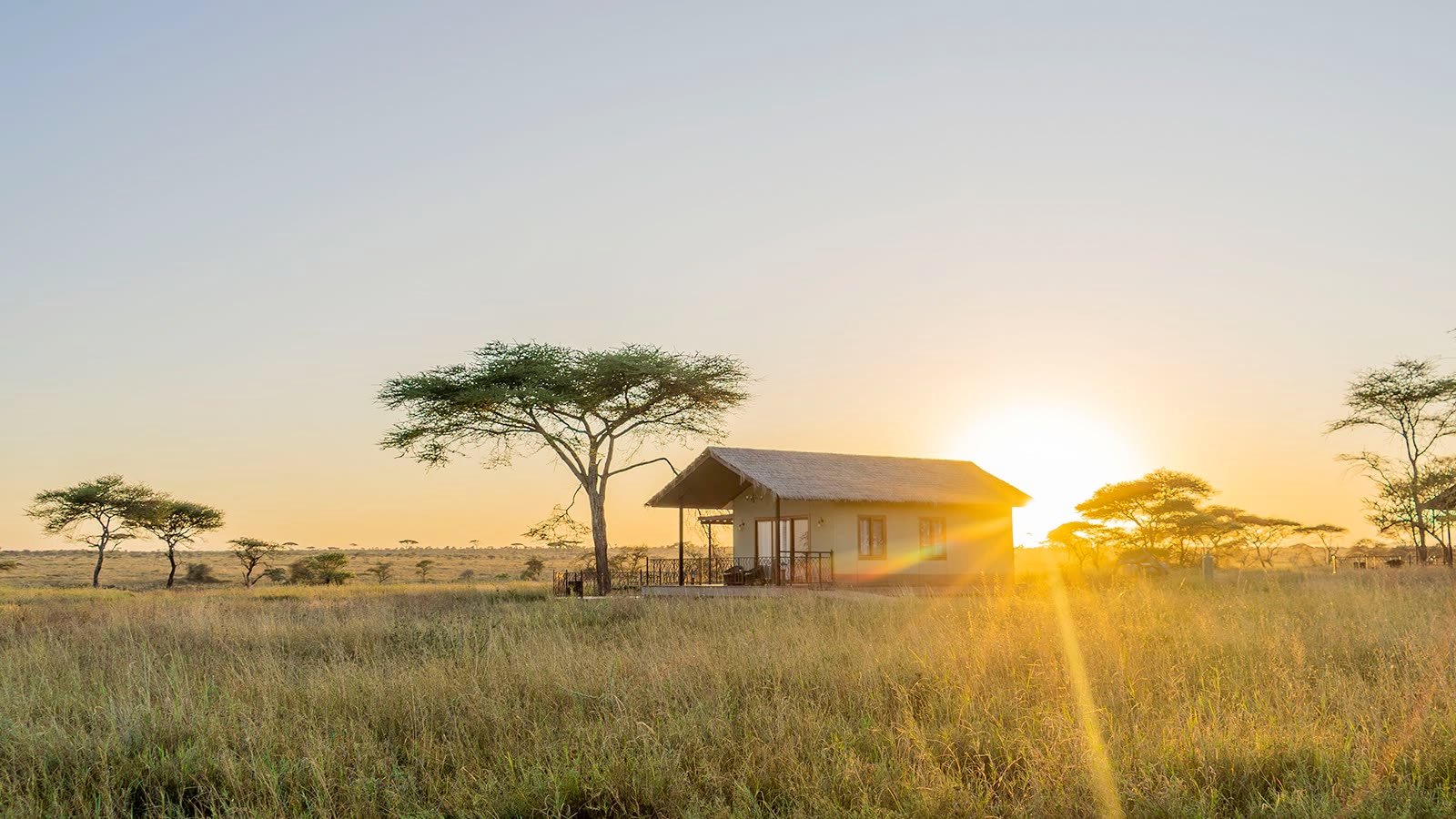
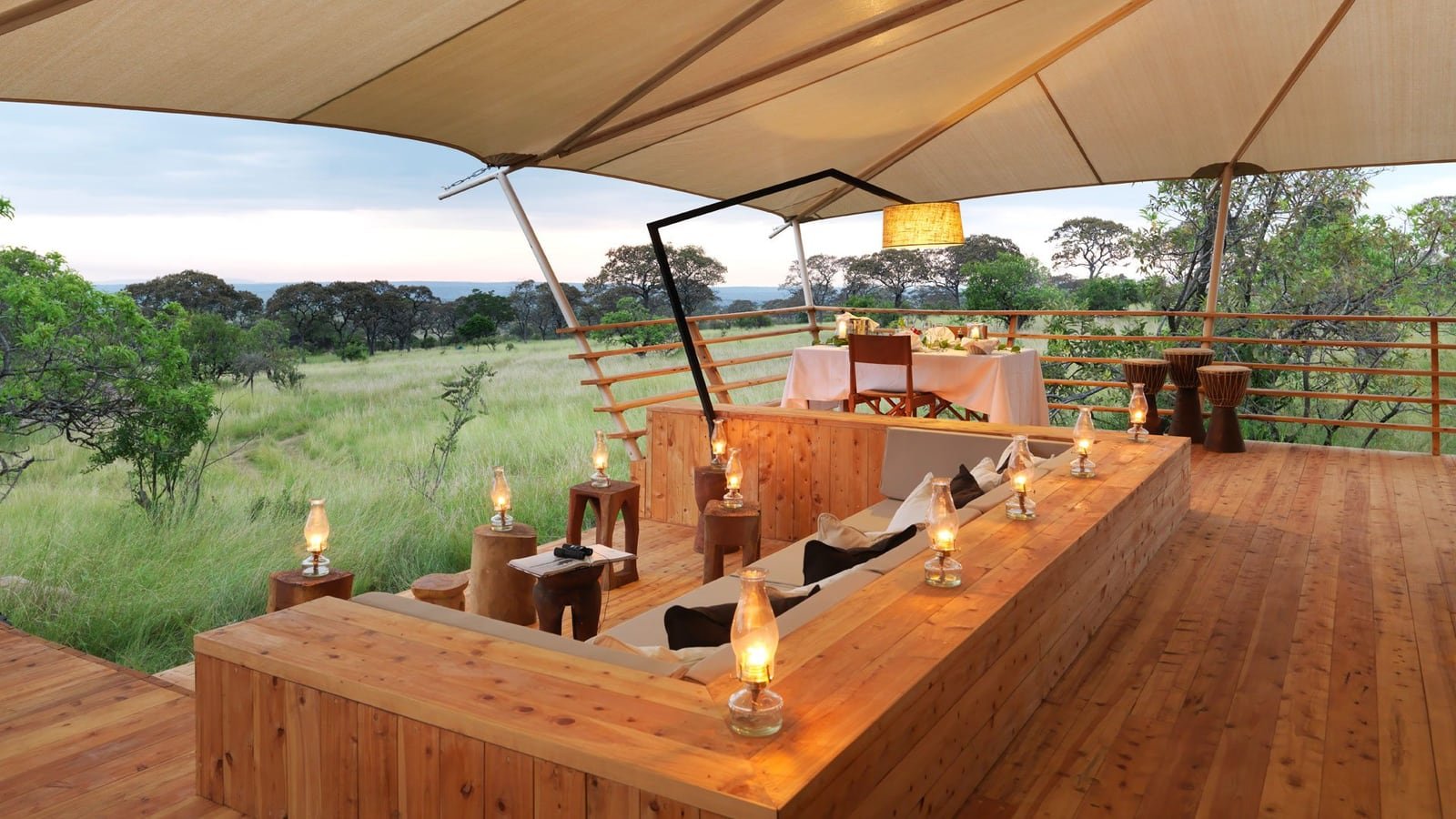
The places we would choose in the Serengeti.
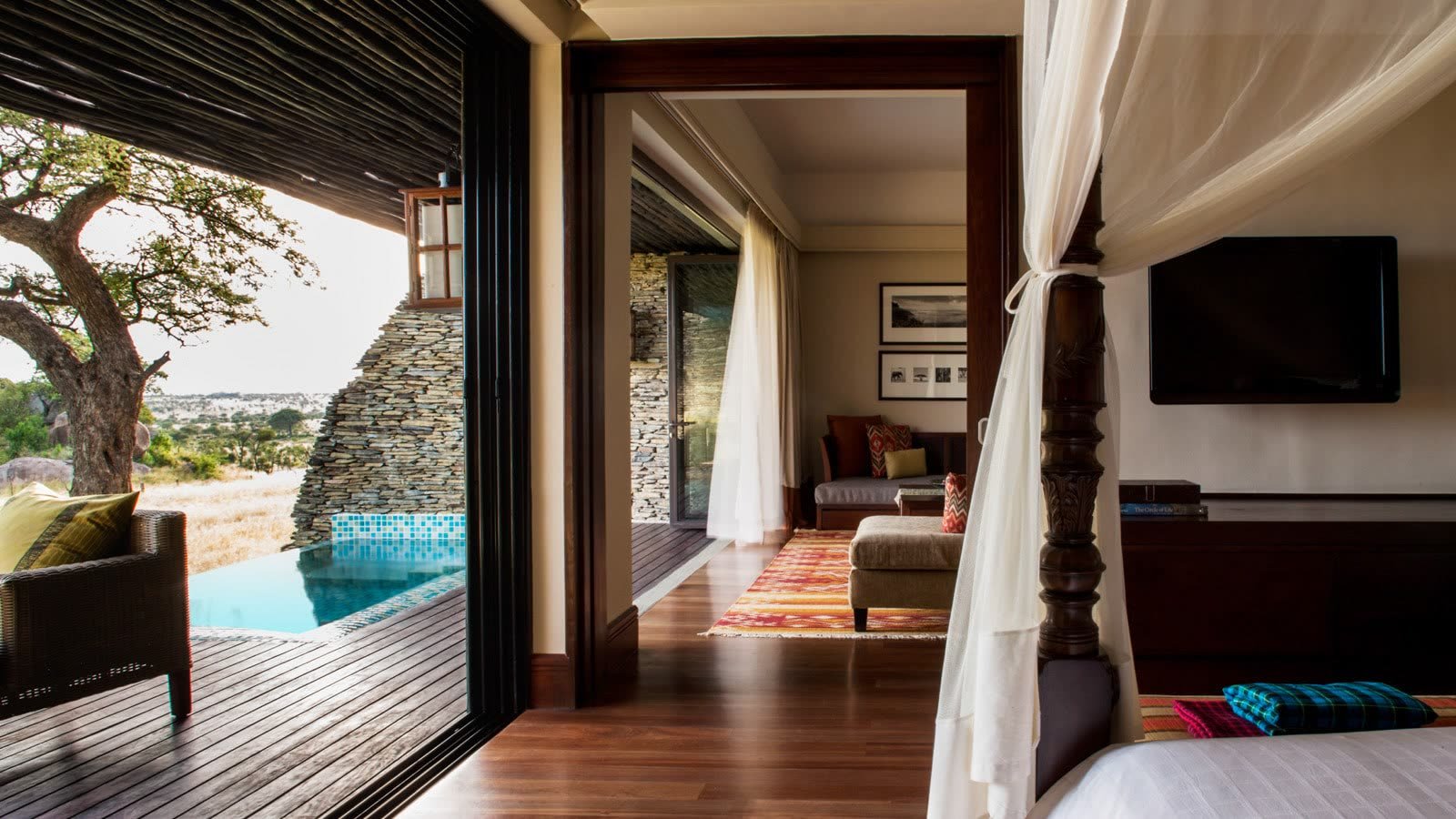
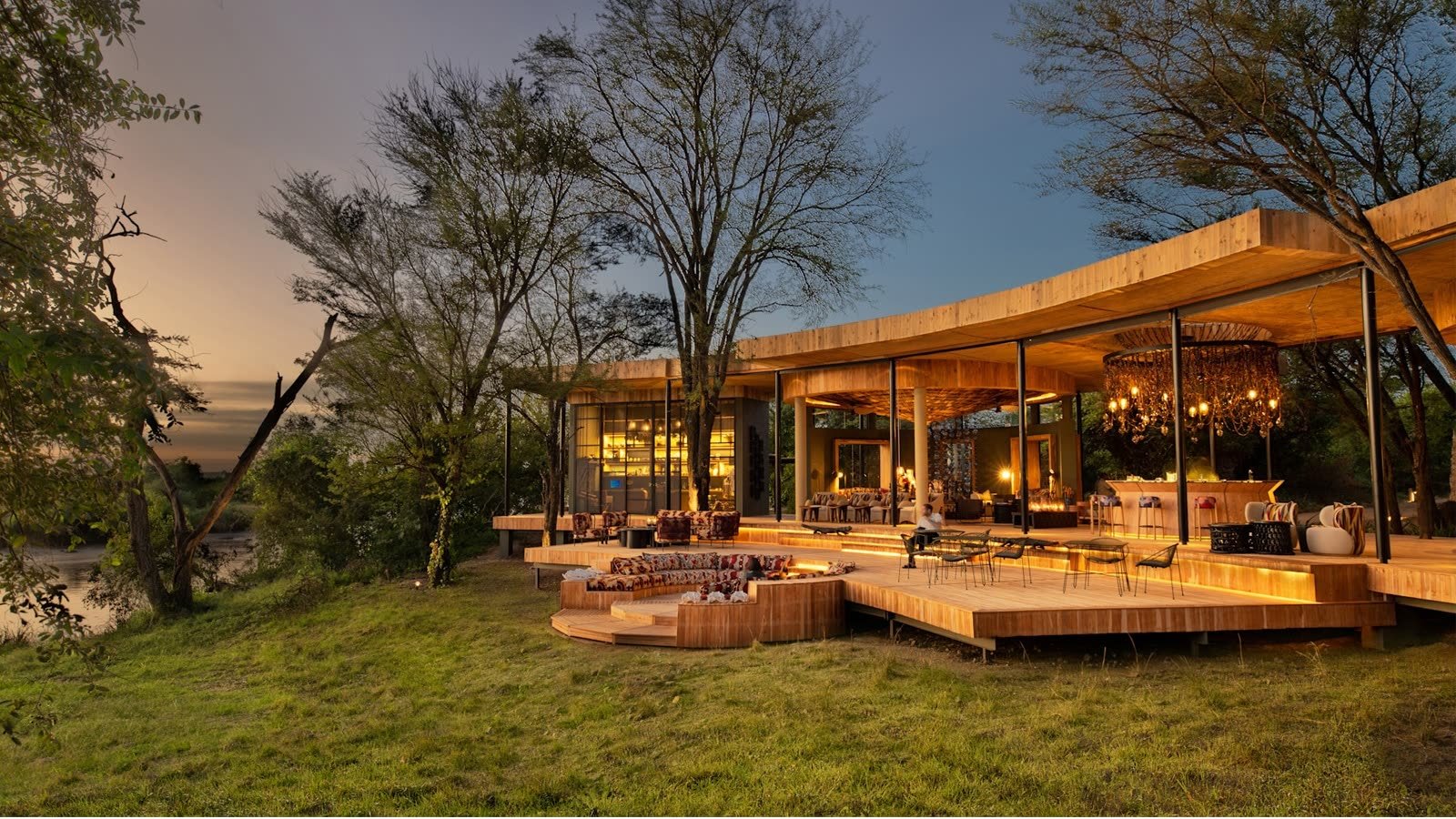
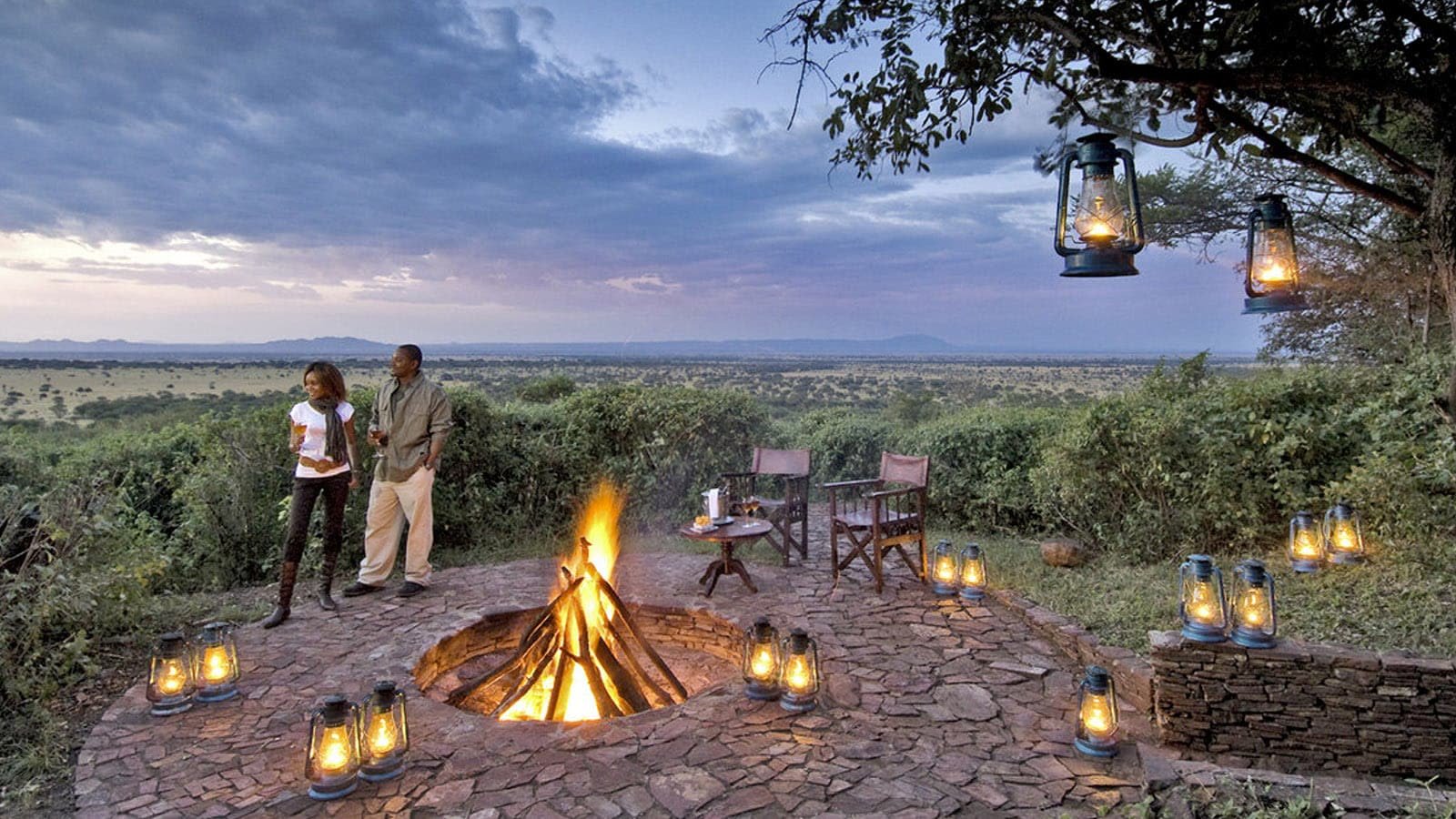
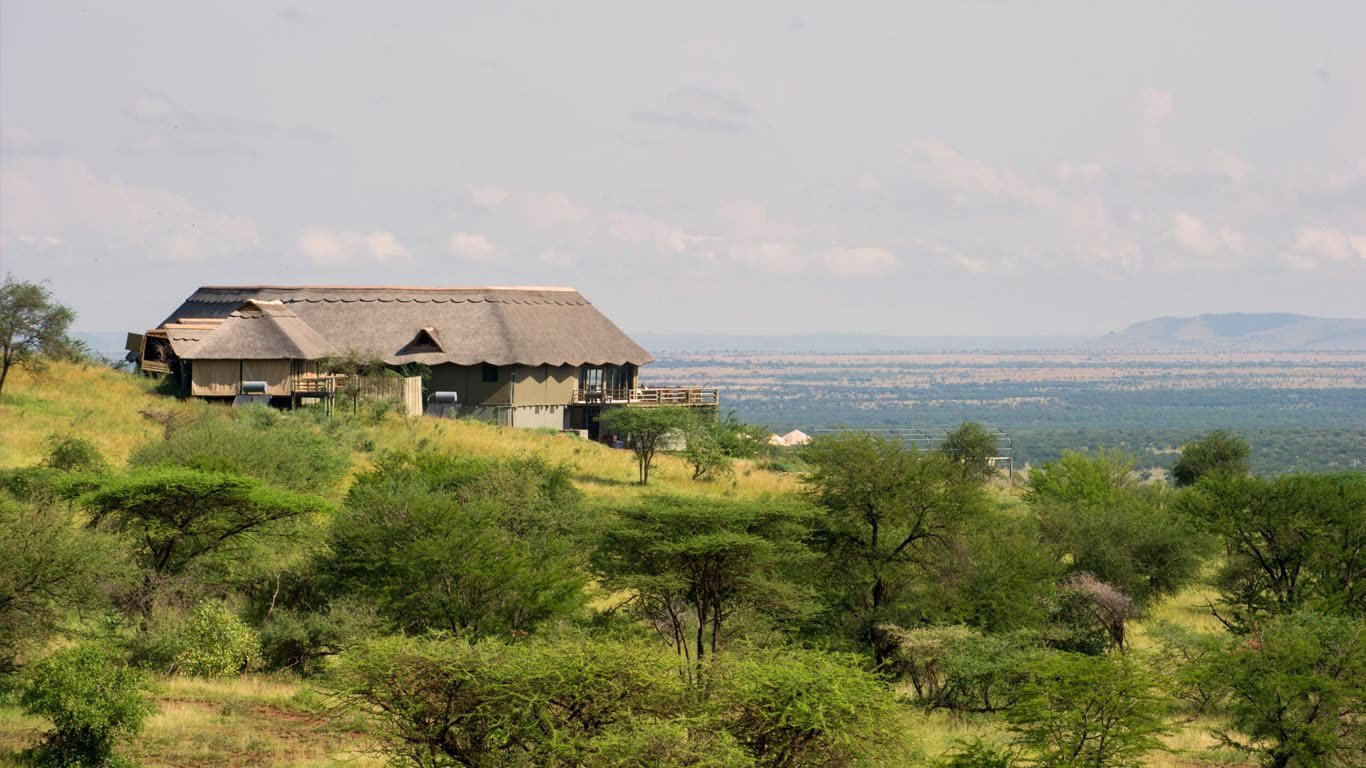
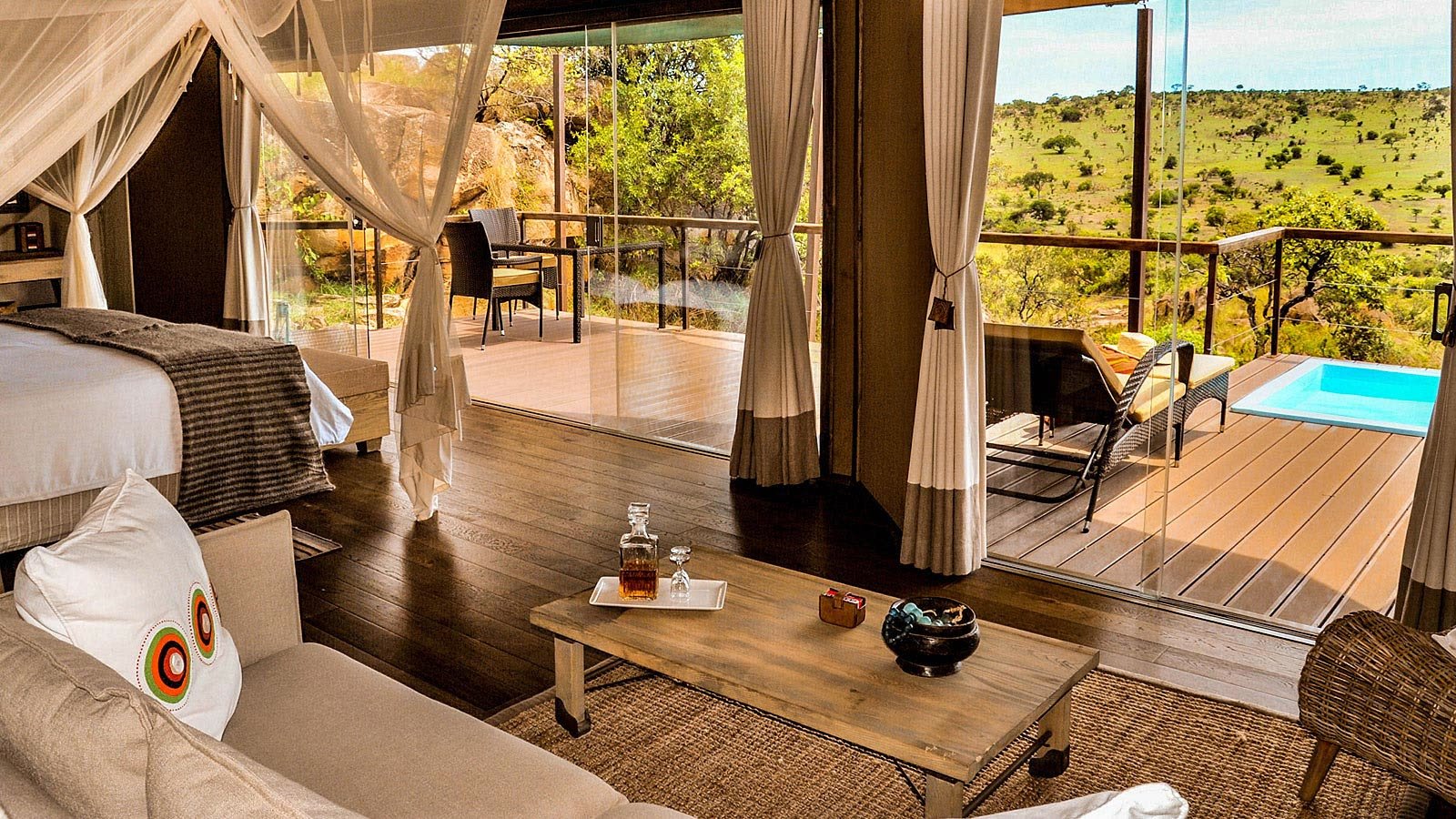
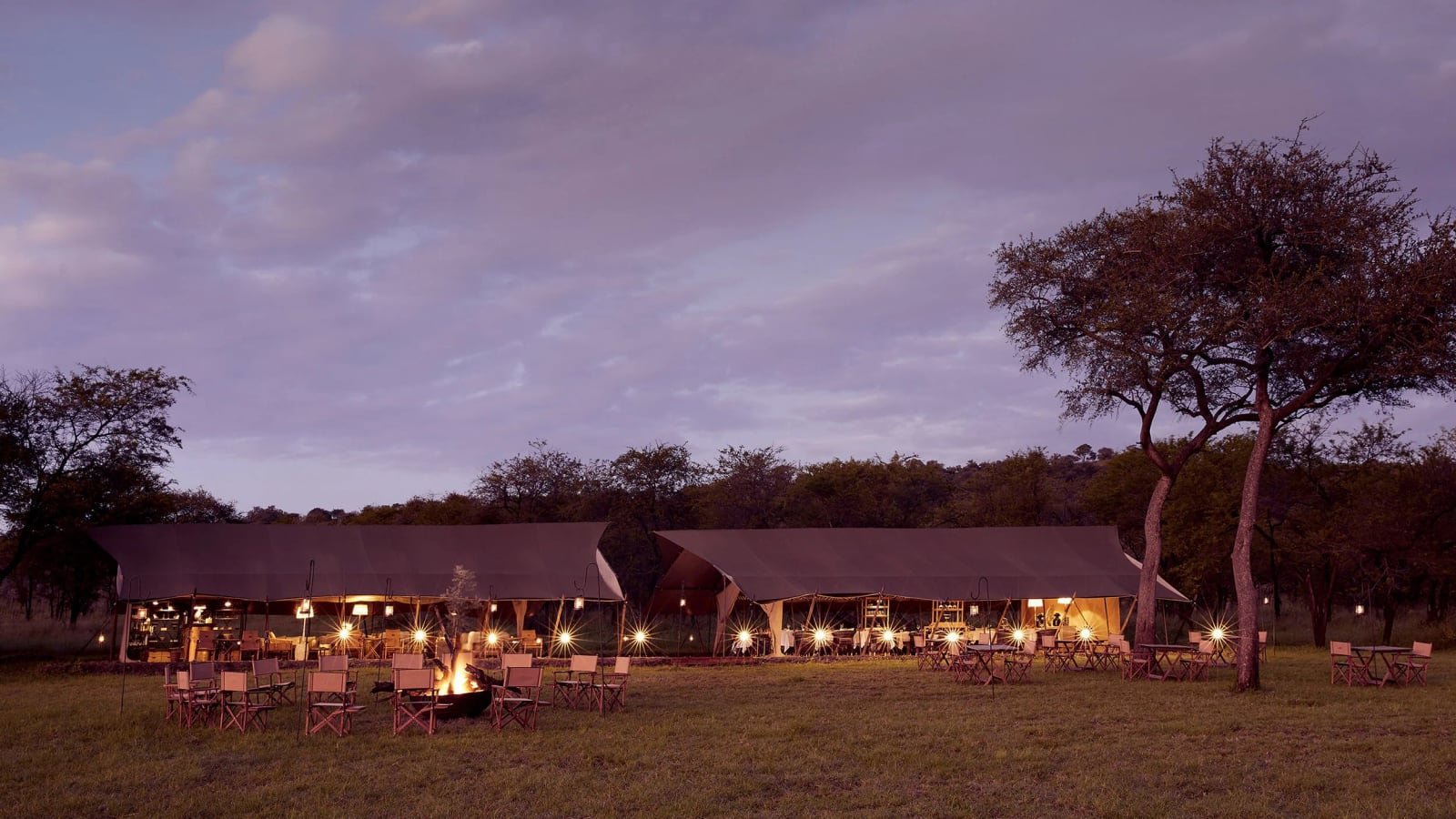
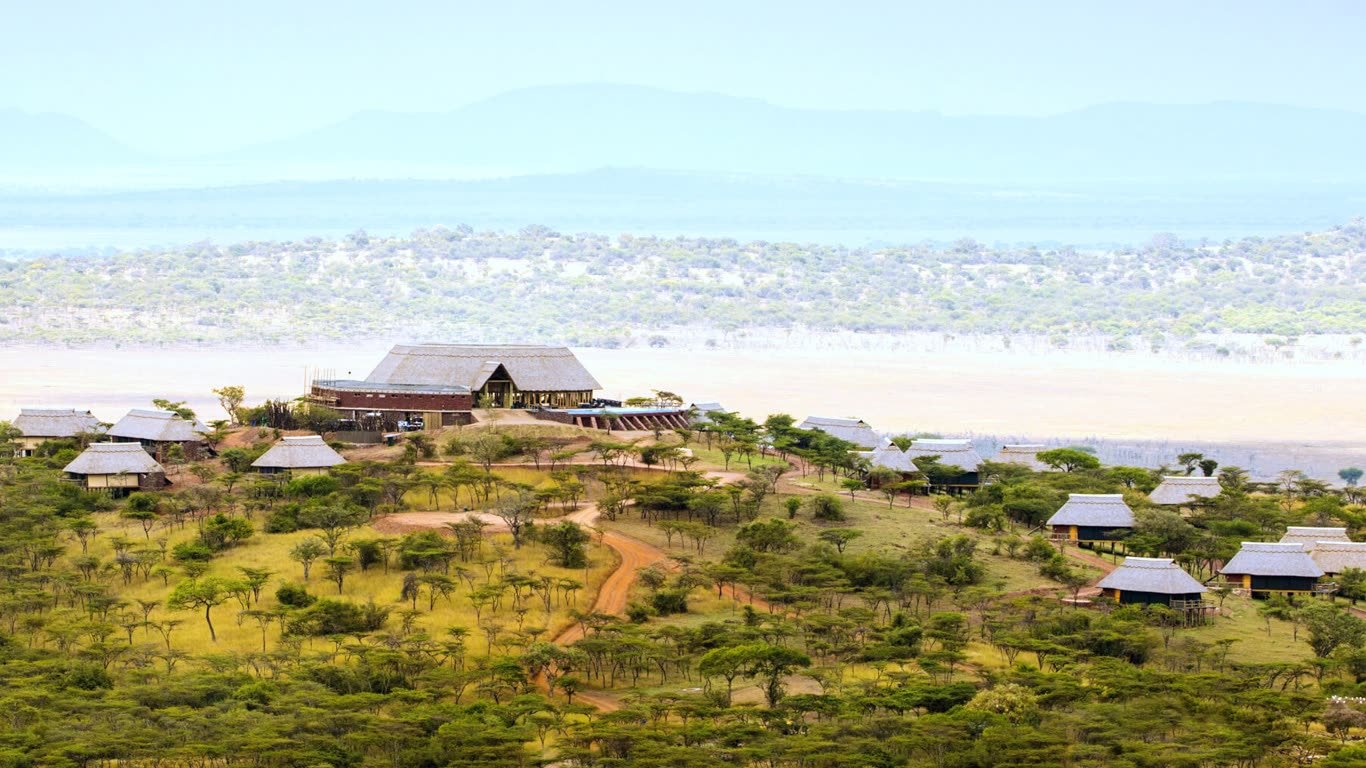
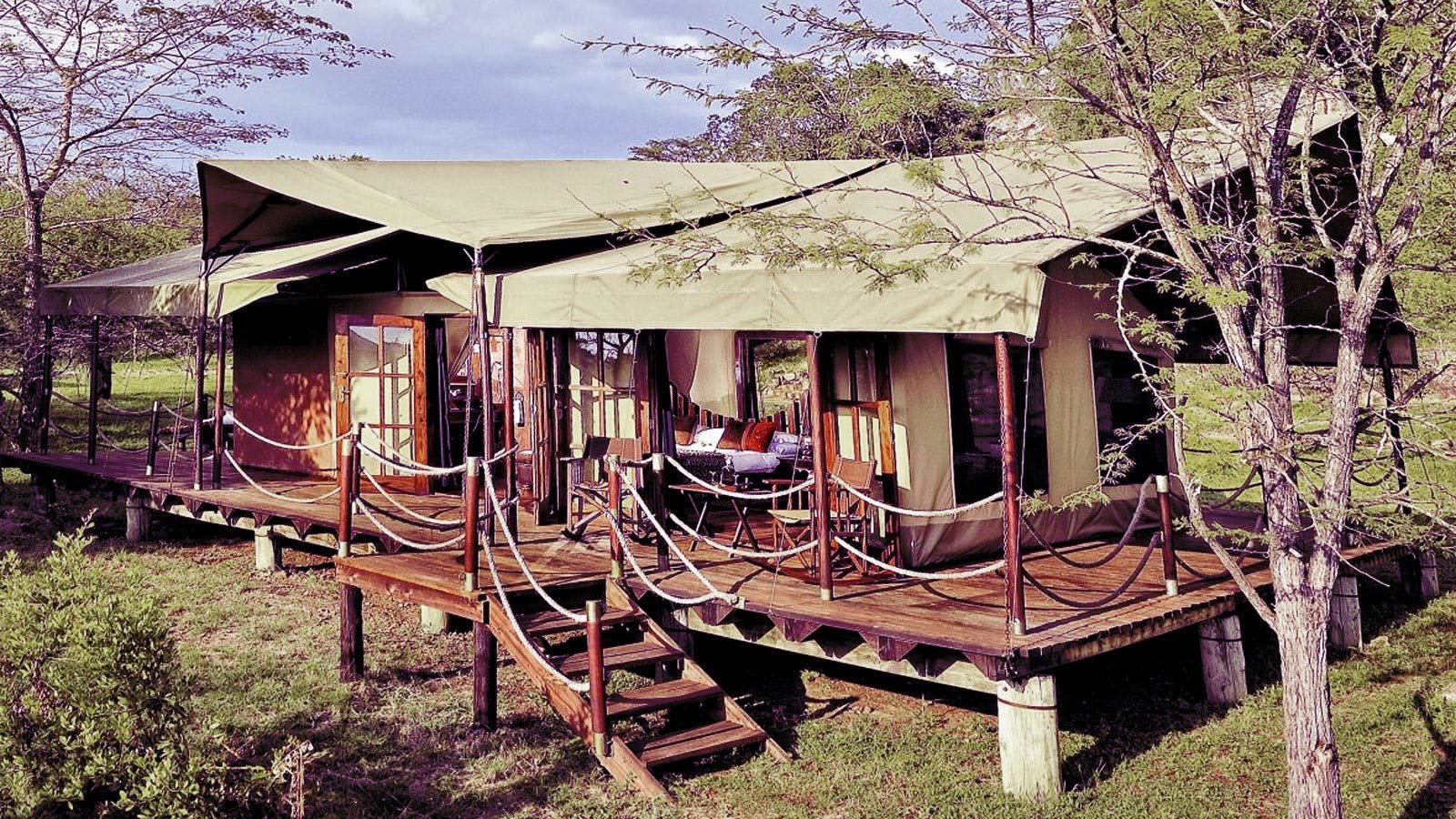
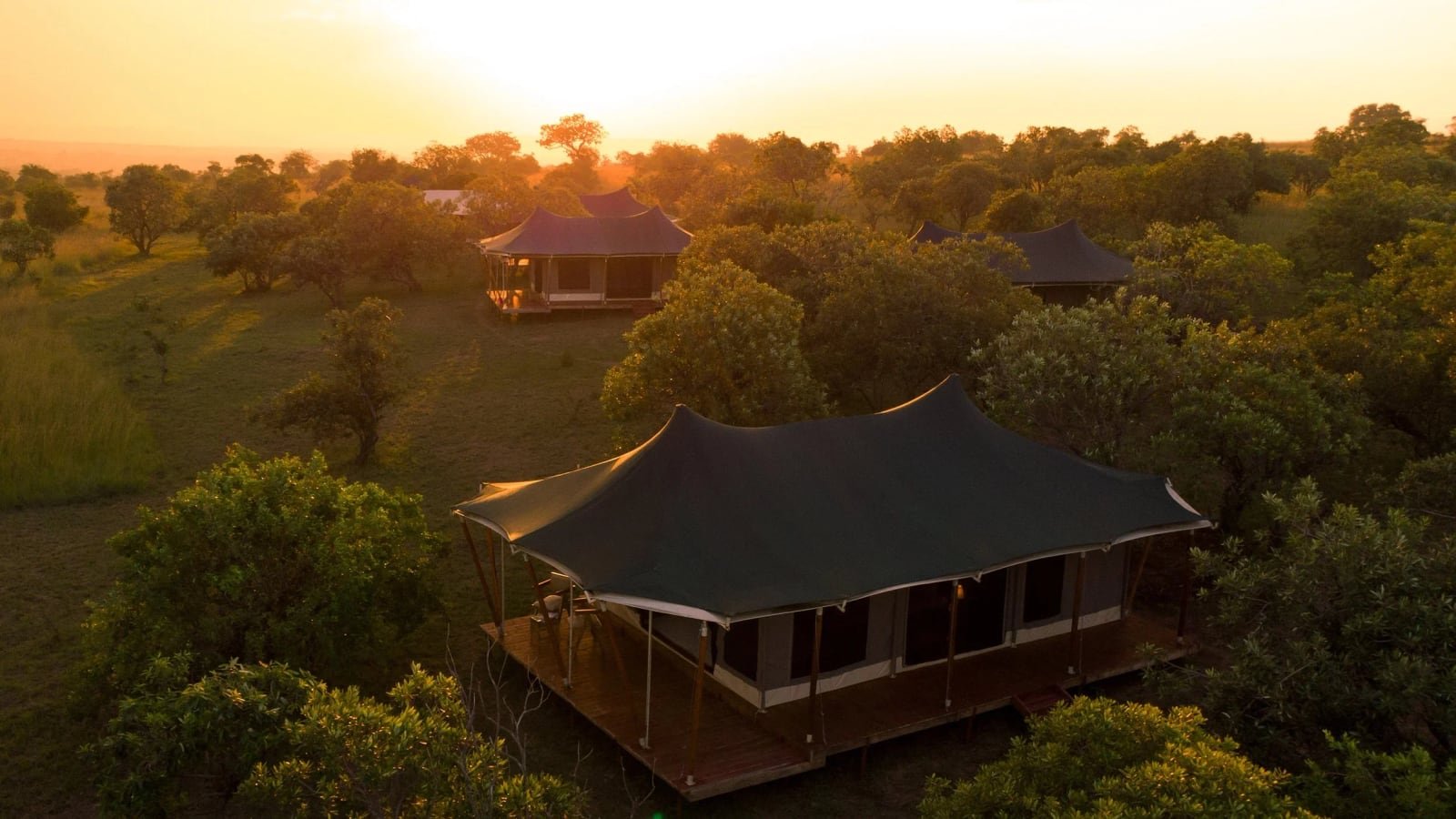
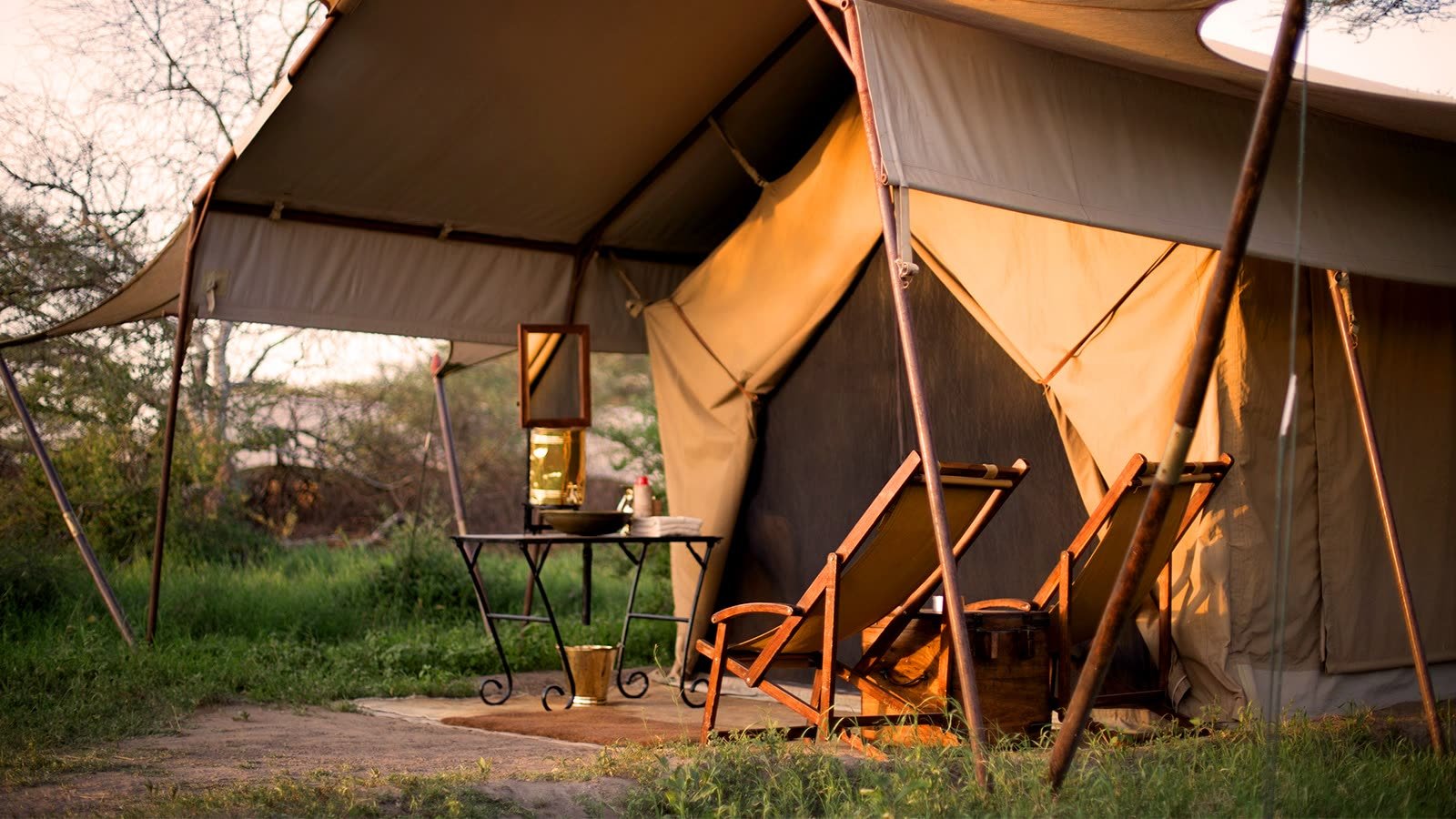
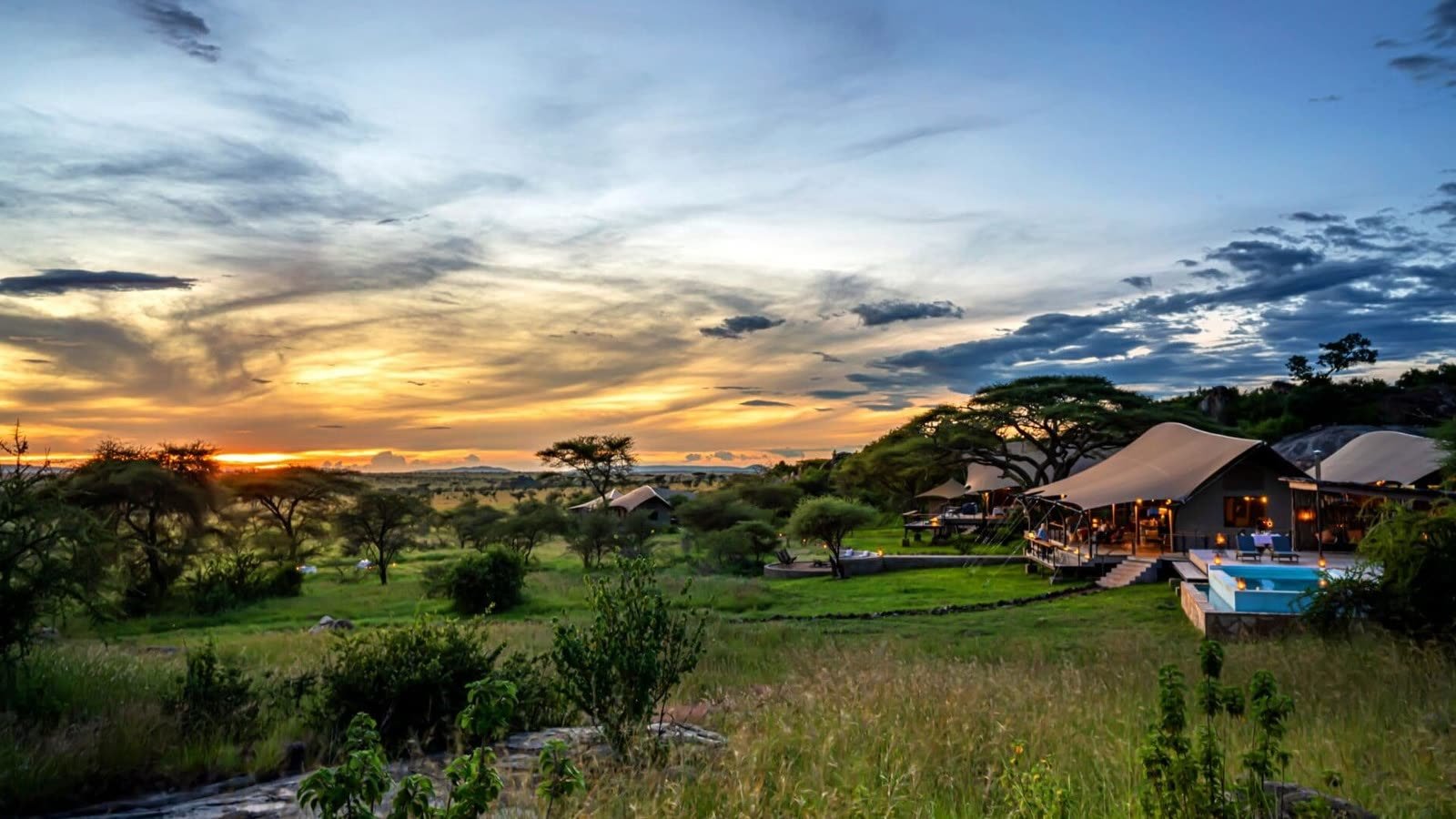
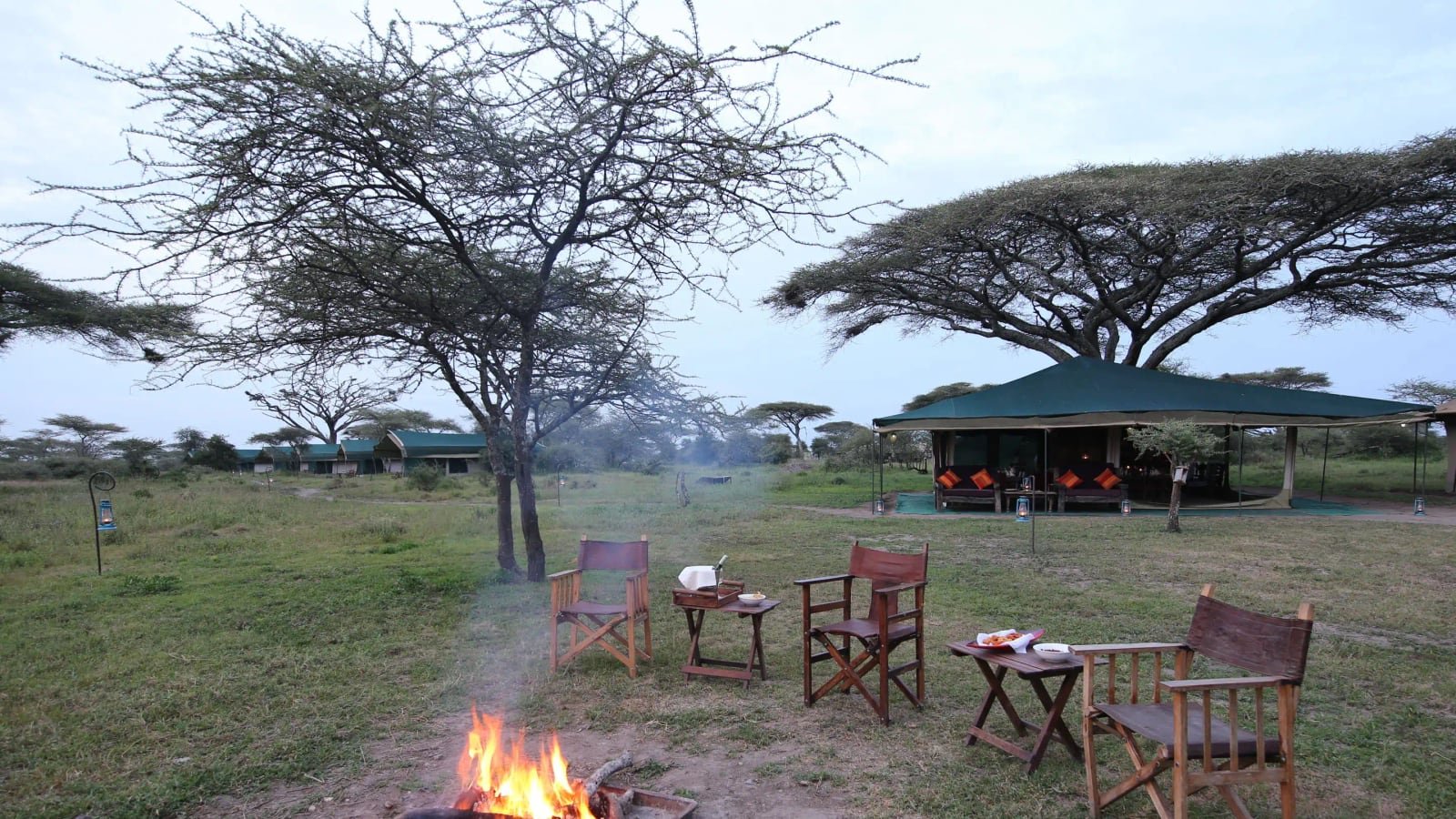
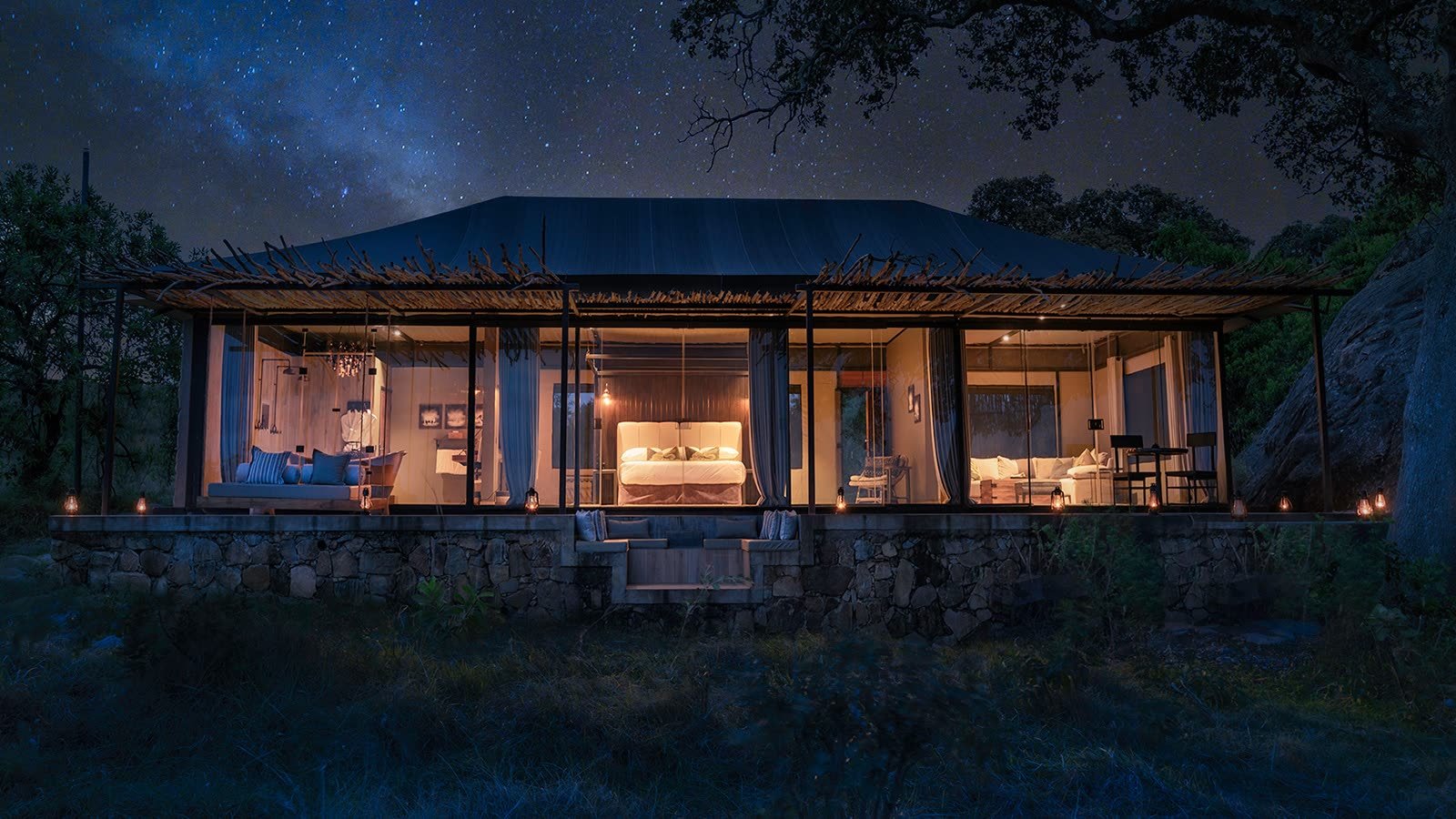
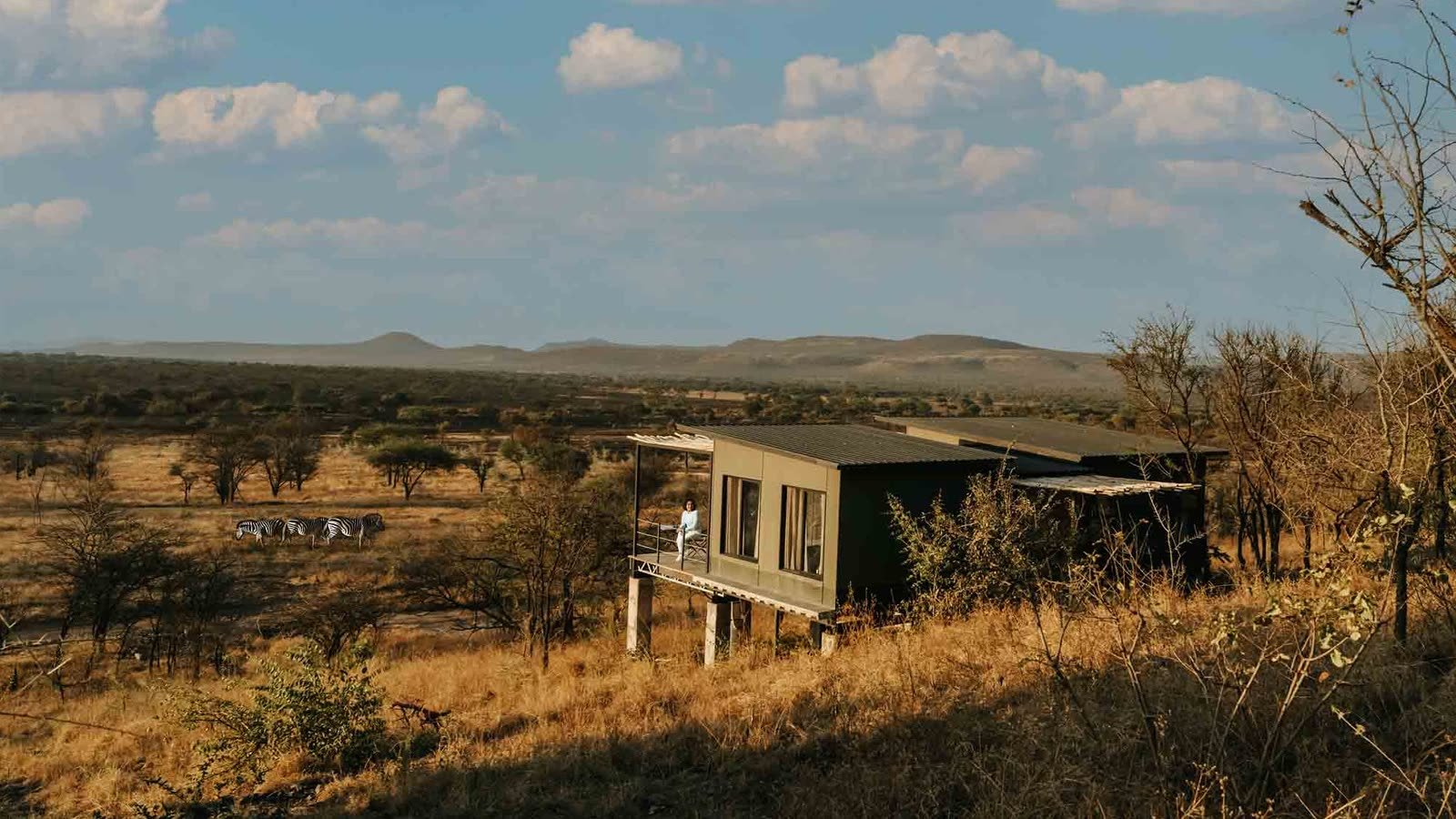
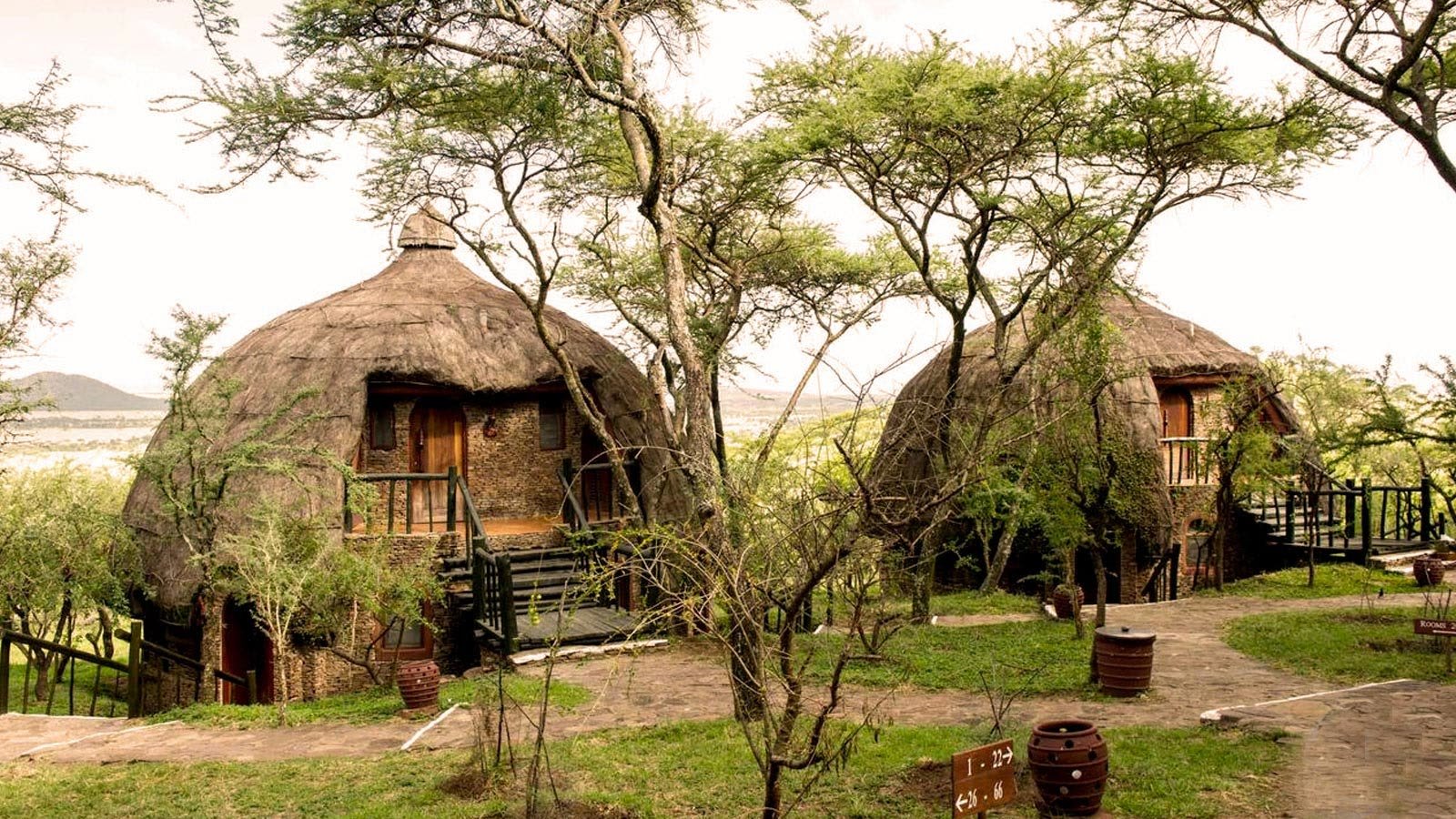
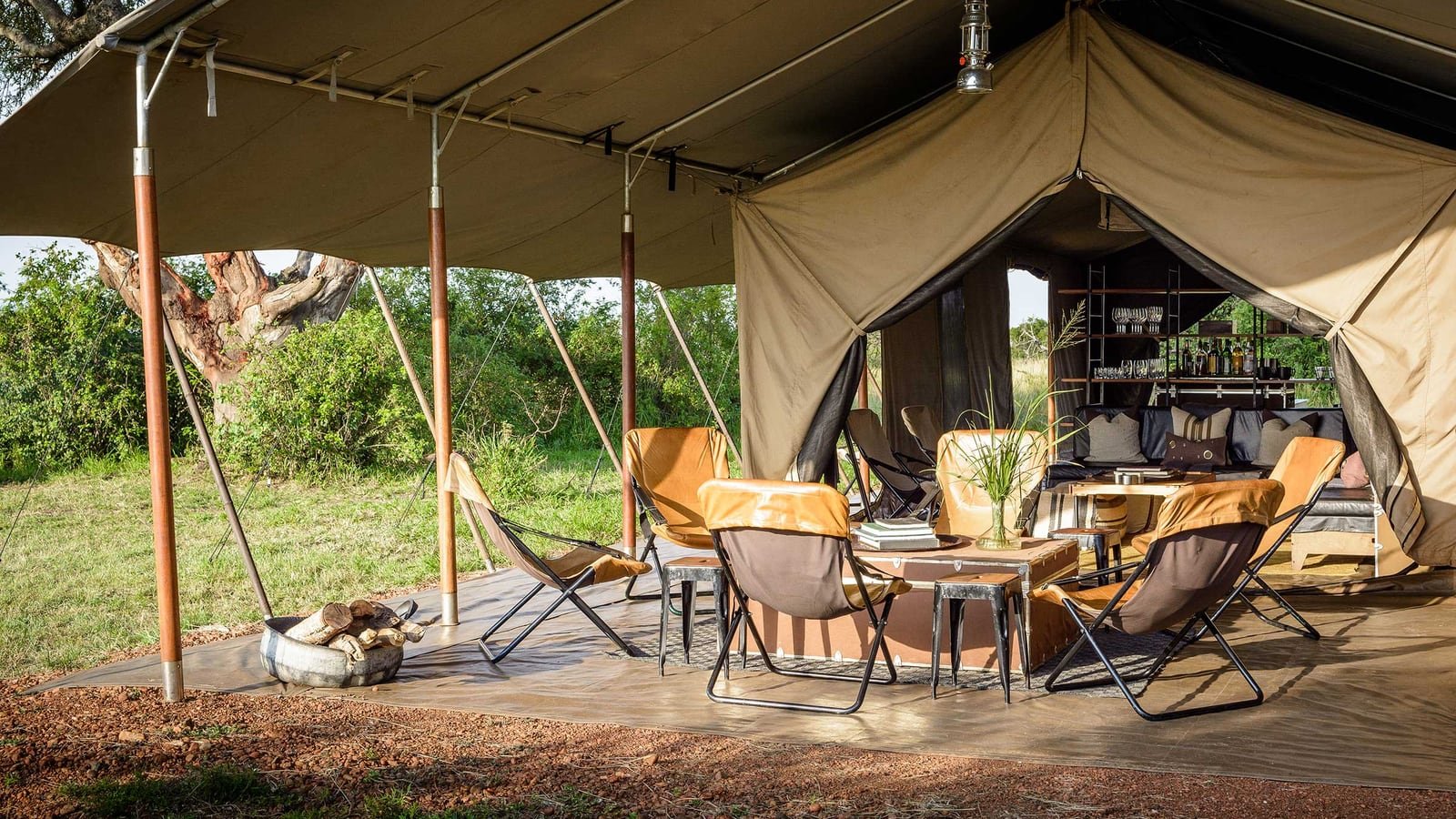
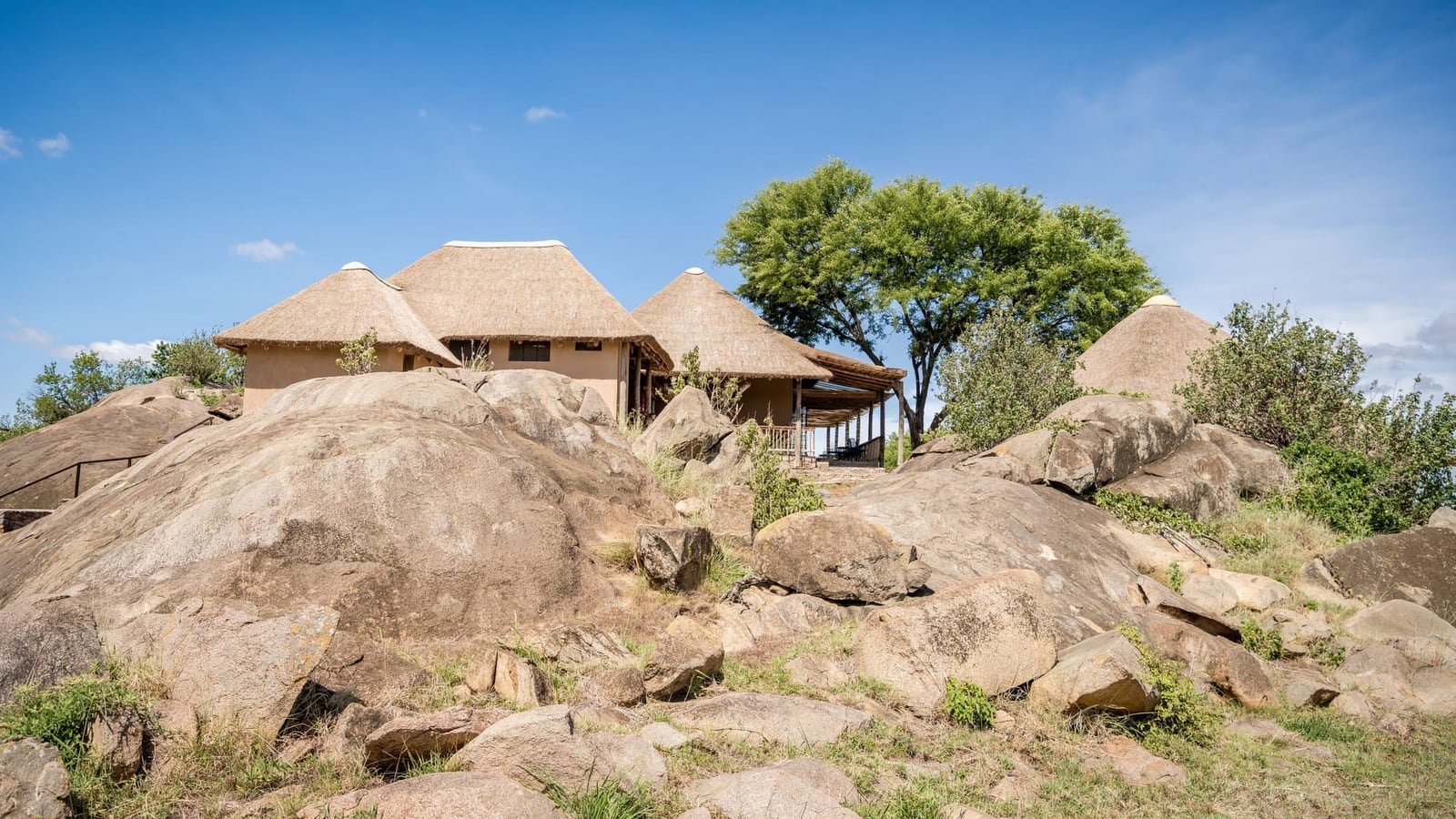
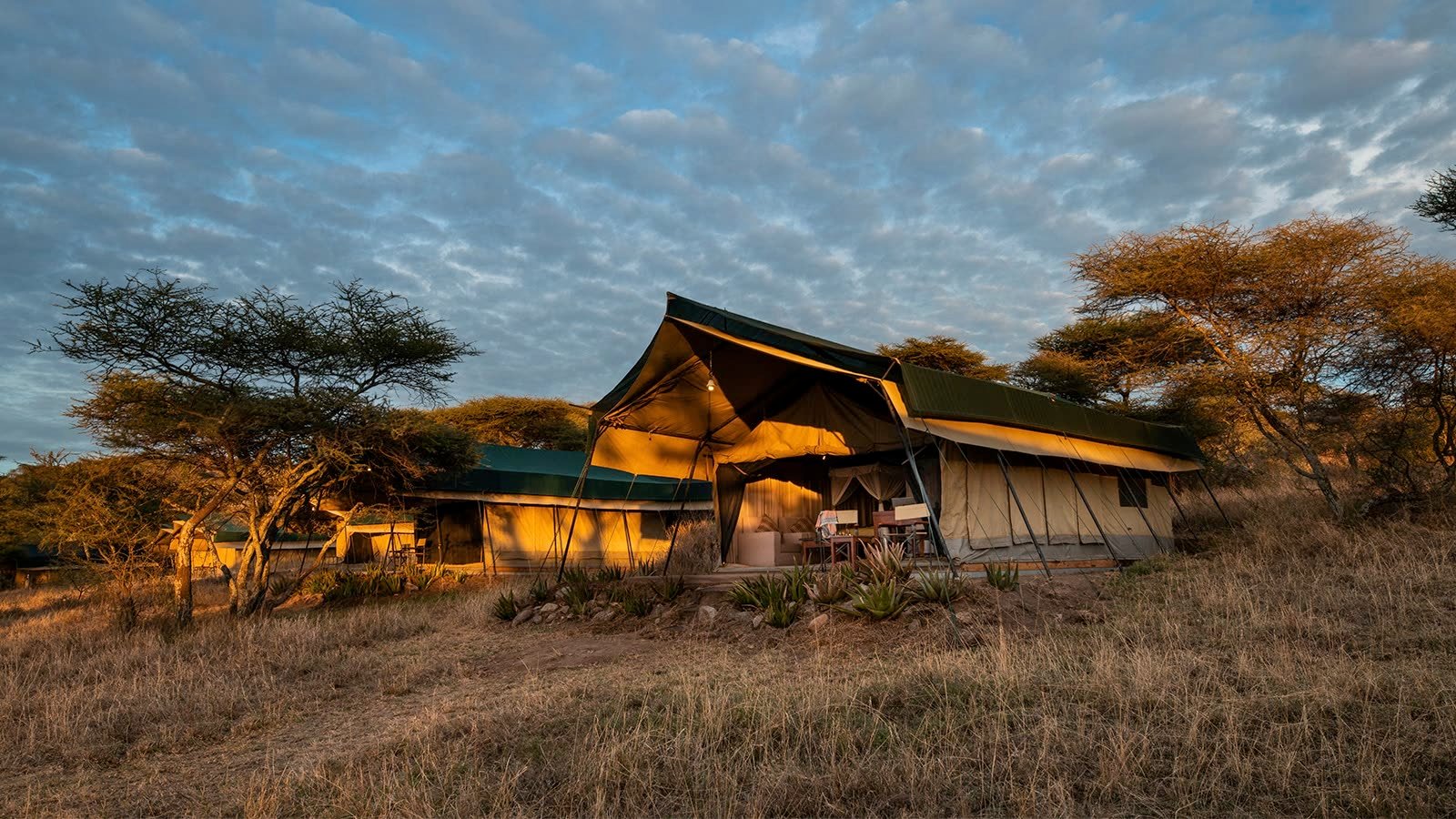
From permanent lodges to seasonal camps, location matters here. We will tell you what works best for your route and the time of year.

Plan your Serengeti National Park safari
Bring your Serengeti National Park story to the team.
Direct line
Tanzania office
P.O. Box 746, Usa-River, Arusha
The plains do not end.
That is the whole point of them.