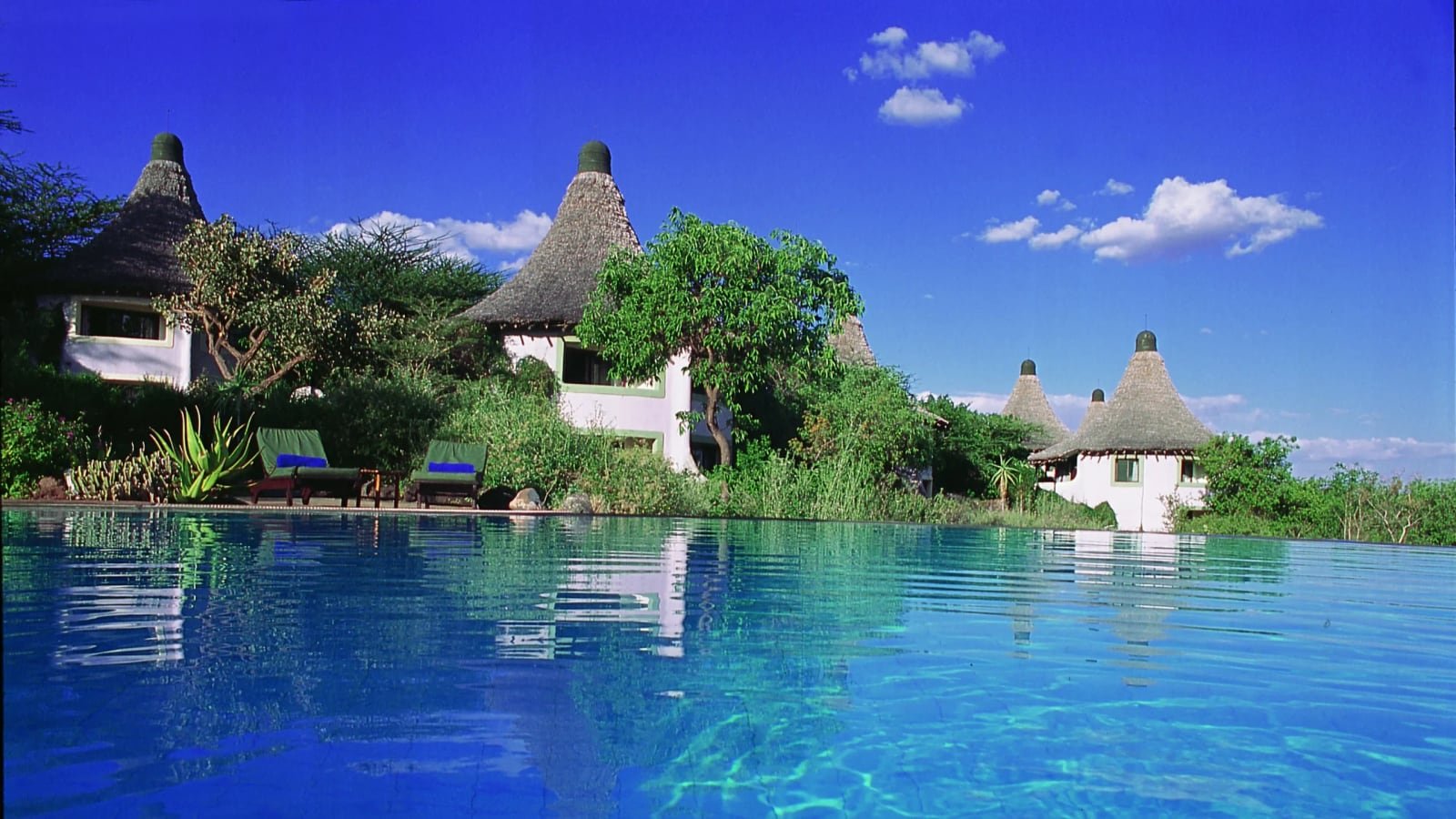
Lake Manyara.

A mirror-glass lake at the foot of the Rift Valley wall — flamingos dusted across its surface, tree-climbing lions, and 300+ bird species in a single basin.

The small park with the loud reputation.

A hundred and twenty-five square miles. Two thousand feet of rift wall. Three hundred bird species. And one of the most overhyped lion stories in safari literature.

Lake Manyara is a small park — most of its area is taken up by the lake itself, which is shallow, alkaline, and home to flamingos in numbers that border on absurd. The strip of land along the lake’s western edge is what you came to see: a groundwater forest cooled by springs from the rift wall, an open floodplain beyond it, and acacia woodlands further south. A short half-day visit is enough to see the highlights. Most itineraries fold Manyara in between Arusha and the crater — an easy first taste of the bush.

What walks (and flies) here

Flamingos, baboons,
and the famous lions.

300+

Bird species.

Including migratory waders. The most diverse bird park in northern Tanzania and a delight for binoculars.

10,000+

Flamingos.

Greater and lesser, dusting the lake surface in pink. Numbers peak in the green season.

Highest

Baboon density.

One of the densest baboon populations in Africa — large extended troops that put on a soap-opera show by the roadside.

2,000ft

Rift wall.

The escarpment that pens the lake in — geological backbone of the whole park, and the source of its underground water.

Three habitats, in one short drive

At the gate

Groundwater forest.

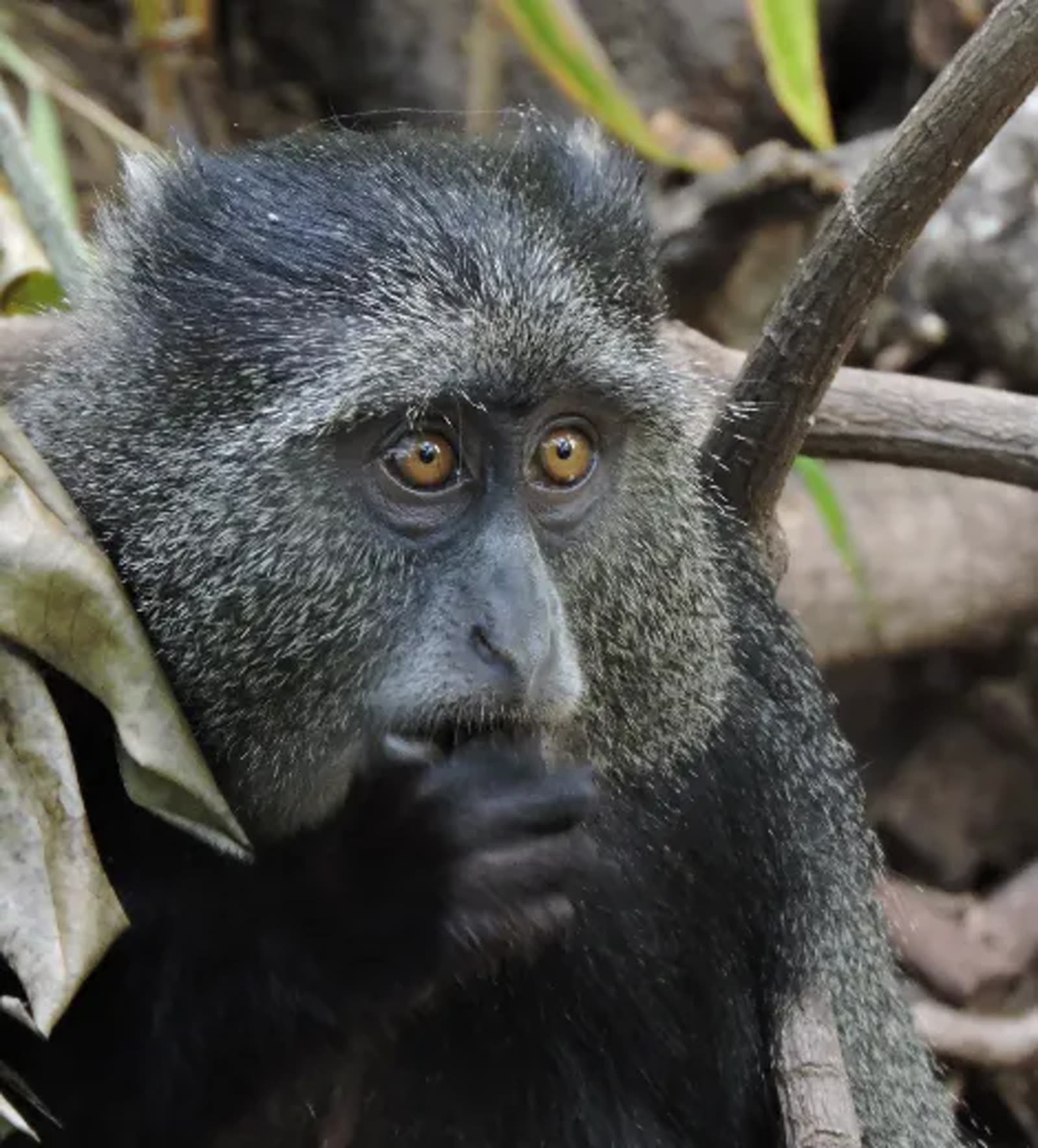
Giant fig trees and mahoganies fed by springs. Elephants, baboons, blue monkeys in the canopy.

By the lake

Floodplain & soda crust.

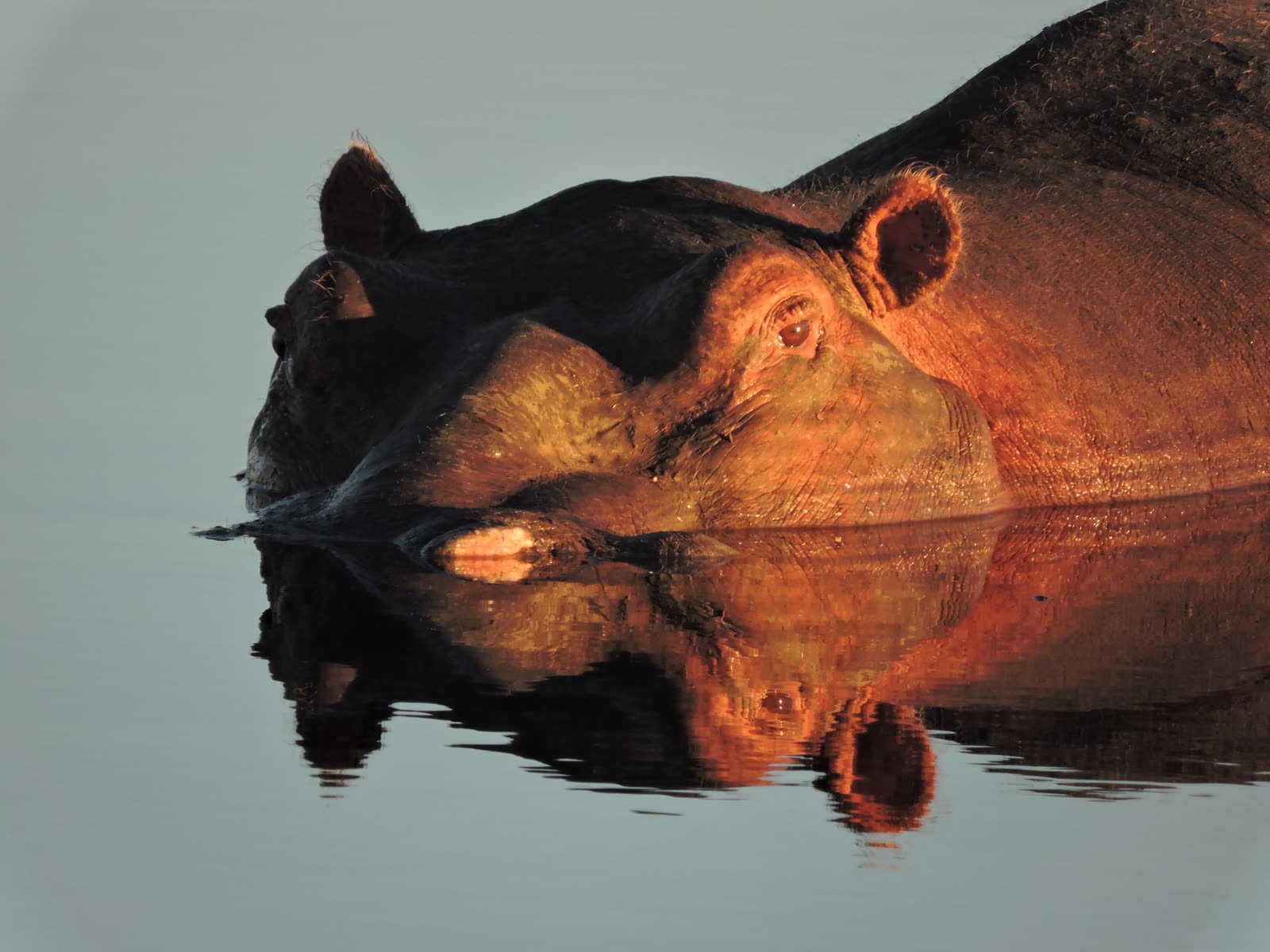
Buffalo, wildebeest, giraffe coming to the edge to drink. Hippo pools just inland.

To the south

Acacia woodlands.

The classic safari-poster country, where the lions sometimes climb. Worth a detour, not a whole day.
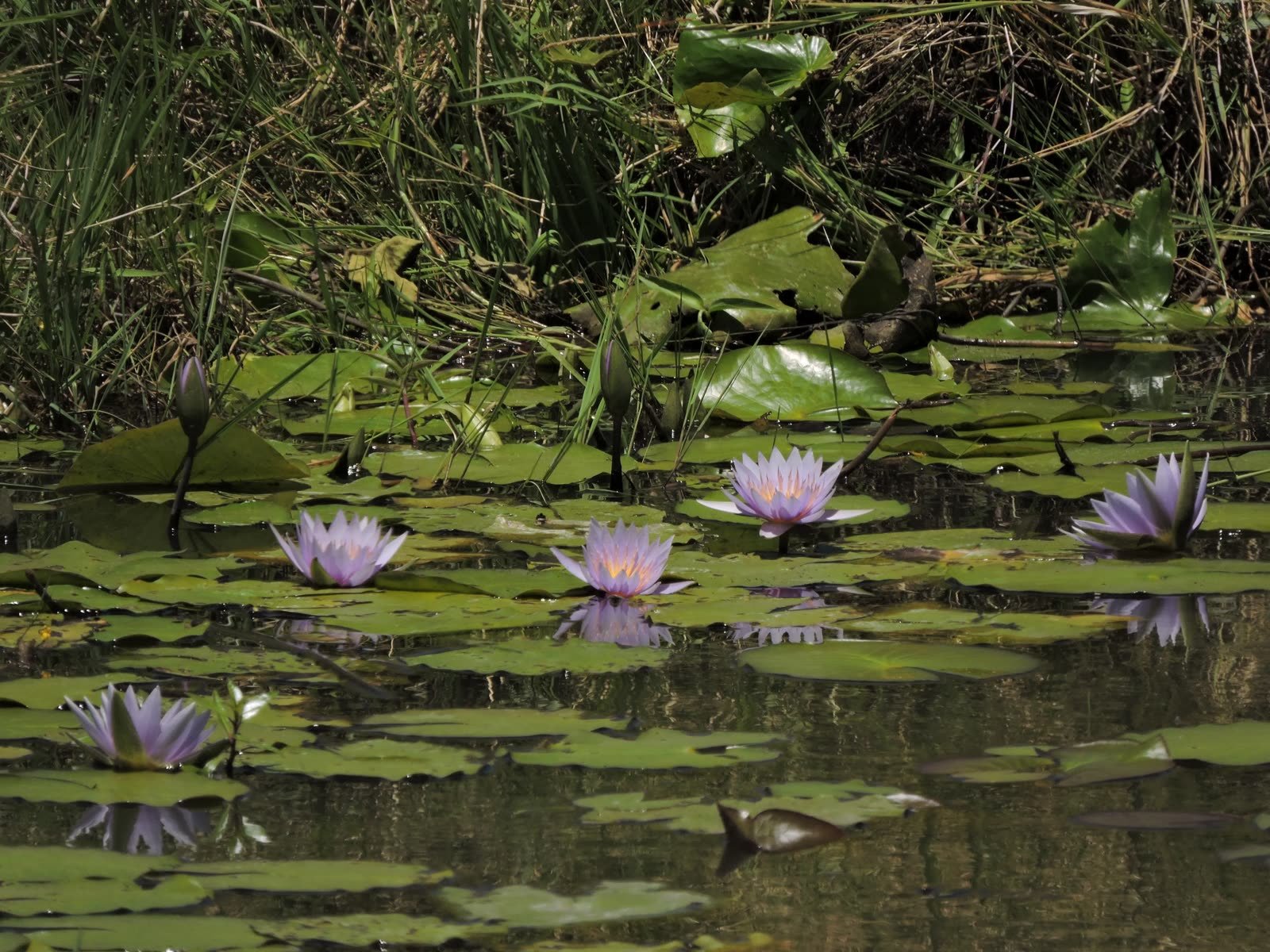
The lake edge at midday

The lake at midday. The pink layer is flamingos — thousands of them feeding on the alkaline algae that gives the water its colour.

Year in the wild

Seasonal highlights.

What Lake Manyara looks like, month by month — weather, wildlife, and whether we’d send you there.

MonthSeasonWeatherWhat you’ll seeRecommend
JanuaryGreen season60–85°F
Sunny, occasional showers
Lake levels high. Massive flamingo flocks. Elephant and baboon troops in the groundwater forest.
FebruaryGreen season60–85°F
Sunny, occasional showers
Migratory birds in numbers. Hippos active. Tree-climbing lions possible.
MarchGreen season60–83°F
Sunny, occasional rain
Lush escarpment. Excellent birding — over 300 species recorded.
AprilLong rains60–83°F
Heavy rain, deep green
Dramatic skies, the lake at its widest. Fewer travellers — solitude with the flamingos.
MayEnd of rains56–81°F
Sunny, cool
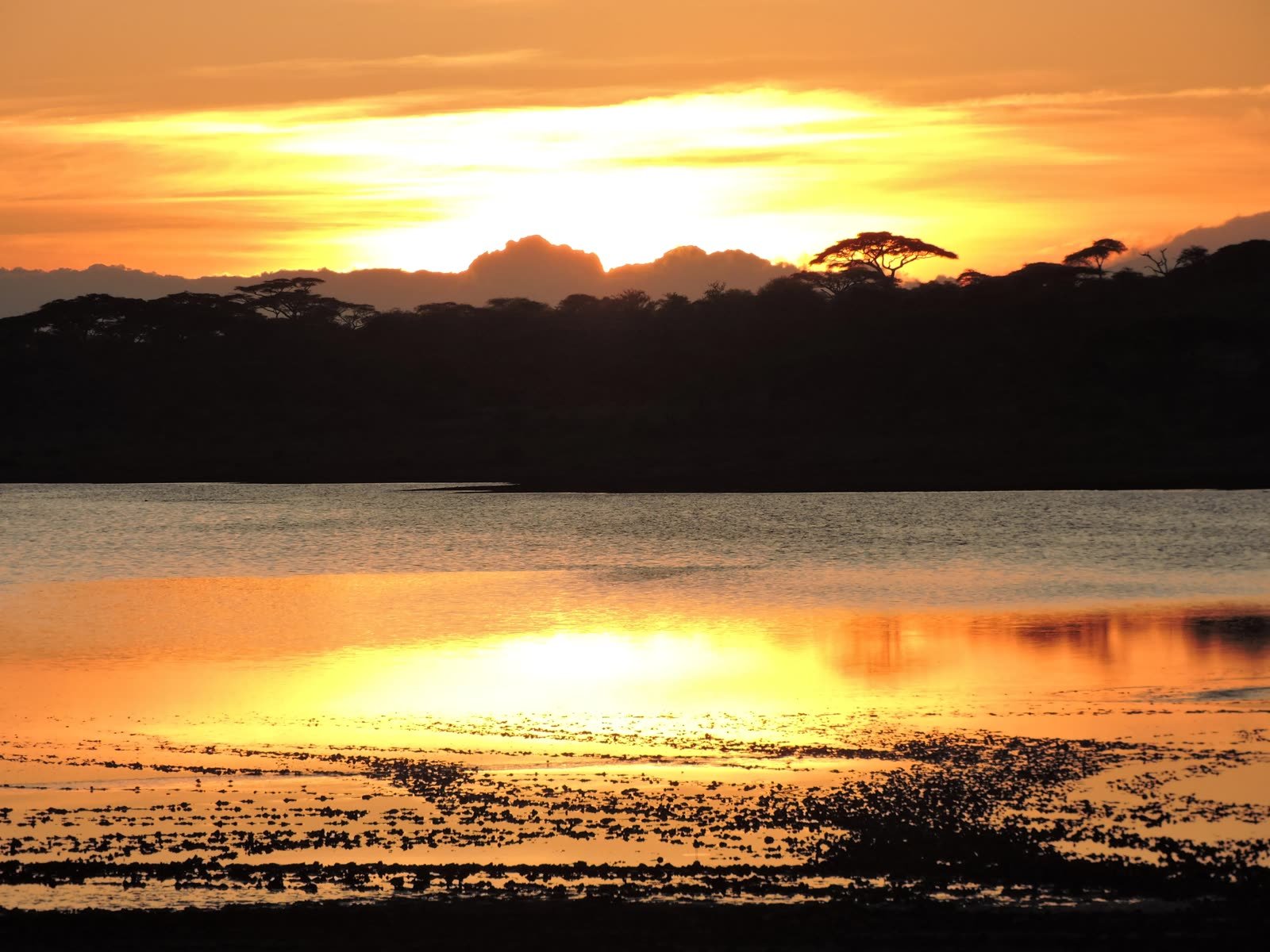
Lake mirrors the sky. Best photography light of the year.
JuneStart of dry season56–81°F
Sunny, cool nights
Receding waters expose mudflats — perfect for waders and storks.
JulyDry season60–83°F
Sunny, dry
Soda crust forms at shoreline. Giraffes drink at the edge.
AugustDry season55–81°F
Sunny, dry
Peak elephant herds in the ground-water forest.
SeptemberDry season55–81°F
Sunny, dry
Best chance of tree-climbing lions in the acacia woodlands.
OctoberLate dry season60–83°F
Warm, dry
Lake at its smallest — concentrated wildlife along the remaining water.
NovemberShort rains60–83°F
Sunny, brief showers
First rains bring back the migrants. Flamingo numbers rebuild.
DecemberGreen season60–83°F
Sunny, brief showers
Lake refilling. Resident game thriving. Lush, photogenic landscapes.

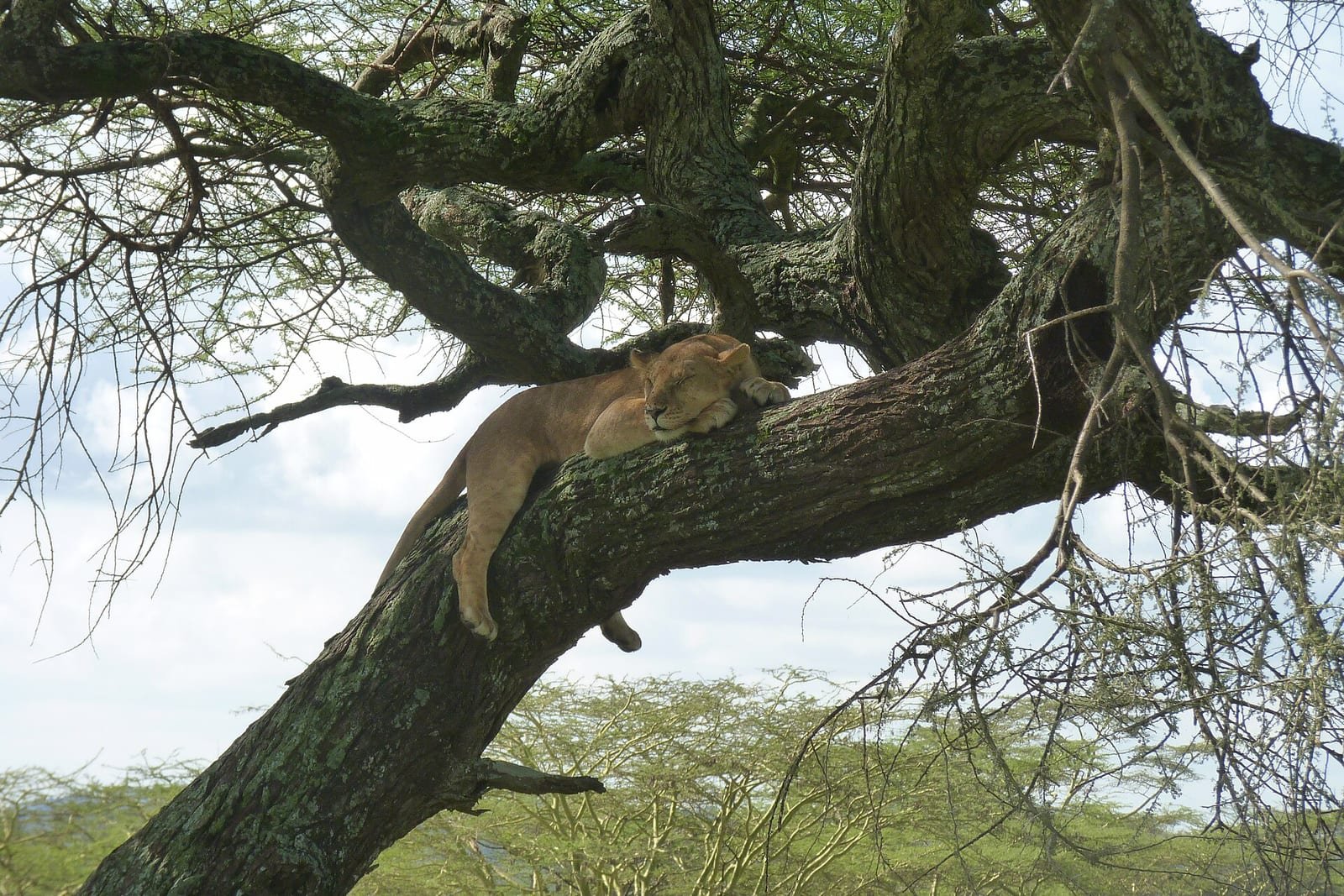
The tree-climbing-lion problem.

The cliché has worked for Lake Manyara for sixty years — ever since a travel writer with a good eye and a small lens turned it into a postcard. The truth is more interesting than the cliché.

If you have read one guidebook about northern Tanzania, you have read the line: Lake Manyara is famous for its tree-climbing lions. Sometimes it is the first sentence on the park’s page. Sometimes it is the only sentence. It is also, on inspection, one of the most misleading single facts in safari literature. Lions in Lake Manyara do climb trees. They are not the only lions that do, they are not even particularly easy to see doing it, and the famous photographs everyone has in their heads were taken in a window of about a decade in the middle of the twentieth century. The story is worth correcting because the rest of Manyara is so much better than the cliché suggests.

Lions climb trees in the Serengeti. They climb trees in Tarangire. The behaviour shows up wherever there is something annoying about being on the ground — tsetse flies, mud, hot earth — and a flat-canopied tree wide enough to lie along. There is nothing about Manyara’s geography that makes the behaviour distinctive. What there is, in Manyara’s acacia woodlands, is one or two well-photographed lions in the 1960s and a writer who needed a hook. The hook held.

If you want to see a lion in a tree, go to the Serengeti. If you want to see what makes Manyara worth a morning, look down at the lake.

Groundwater forest interior
The groundwater forest at the gate. Springs from the rift wall feed the figs and mahoganies overhead.

The lake itself, and the algae.

What is actually distinctive about Manyara is the lake. It is alkaline, fed by springs from the rift wall above, with no outlet — everything that flows in stays in, until evaporation concentrates it into something close to salt. That alkaline broth is exactly what a particular blue-green algae loves, and the algae is exactly what the flamingos eat. The pink layer you see hovering above the lake on a still morning is not a quirk of light; it is a food chain working at speed. Greater flamingo, lesser flamingo, pelican, fish eagle, kingfisher, stork. Three hundred bird species in a park you can cross in an hour.

The forest at the gate.

The other surprise in Manyara is the groundwater forest you drive into the moment you pass the gate. It looks nothing like the rest of the Northern Circuit — tall figs, mahoganies, blue monkeys overhead, water everywhere underfoot — because the rift wall above the park leaks the rain it catches in a slow underground river that surfaces here. Elephants love it. Baboons own it. A small troop will sometimes block the road for ten minutes while one female grooms another in the middle of the track and her cousin steals fruit from a stall.

Half a day, not three.

Be honest with us about Manyara. A half day is right for most travellers; some people, especially birders, want a full day and they get rewarded for it. But it is a park to fold in, not to build an itinerary around. The standard pattern is to drive through it on the way up to the crater rim, which puts you on the lake at midday with the light flat and the lions sleeping. Pushing the visit earlier — an overnight at Manyara, in for an early gate — trades a complicated logistic for a much better morning.

Ready to stand at the lake’s edge?

Tell us when you’re thinking and who’s coming. We’ll shape a private safari around what you want to see.

Reach the team

Where every safari begins — with a conversation.

Direct line

+255 700 000 000

Tanzania Office

P.O. Box 746, Usa-River, Arusha

Tanzania, East Africa

Hours: Daily 8AM — 8PM EAT

Email Us

info@africawildbynaturesafaris.com

Replies within 24 hours

Tell us your story

Tell us what you’re hoping for — the people, the timing, the wild moments you’re chasing.