Our approach

Six moves that shape every itinerary.

No fixed circuits, no recycled templates. Every safari we put on paper is drawn around your dates, your people, and what you want to see.

What follows are the six principles we hold to on every itinerary we draft, learned by repetition across hundreds of trips. The moves that quietly separate a good safari from one you never forget.

01.

Principle

Every safari starts blank.

We don’t shuffle you through a circuit someone designed for the “average” visitor. Your itinerary is drawn around what you’re actually after — whether that’s a couple chasing first light over the Mara, a family stretching the kids into the bush for the first time, or photographers happy to spend three hours on a single leopard.

The first conversation is the one that does the most work. We listen for what you don’t say: how slowly you want the days to move, what kind of camp you sleep best in, whether a long drive in a Land Cruiser sounds restful or exhausting. The itinerary you receive is shaped by those answers, not by what’s in last season’s brochure.

02.

Principle

Fly in, drive back.

Our signature move on most multi-day itineraries: fly into the deep Serengeti on the first morning, drive back to Arusha at the end. A light aircraft puts you on a remote bush strip in a couple of hours, where your guide and vehicle are already waiting. By lunchtime on day one you can be watching lion cubs in the grass instead of staring at the back of a road map.

Energy goes to the wilderness; transit days don’t eat your safari.

The drive back — through Ngorongoro and the lakes, with stops as the country opens out — gives you the gentler half of Tanzania at a pace that lets the experience settle.

03.

Principle

Four full days in the Serengeti, minimum.

This is not a soft suggestion. The Serengeti is the largest, most varied wildlife landscape on the continent — 5,700 square miles of park inside an ecosystem twice that size — and a single base will only ever show you a slice of it. Four days minimum, almost always split across two regions, is the floor we hold for everyone.

How we split that time depends on when you come. In the green season we want you on the Southern and Eastern Plains for the calving and the cheetahs; in the dry months we’ll move you north toward the Mara crossings. The resident wildlife of the Central Serengeti — the famous Seronera prides, the leopards in the sausage trees — tends to anchor most itineraries either way.

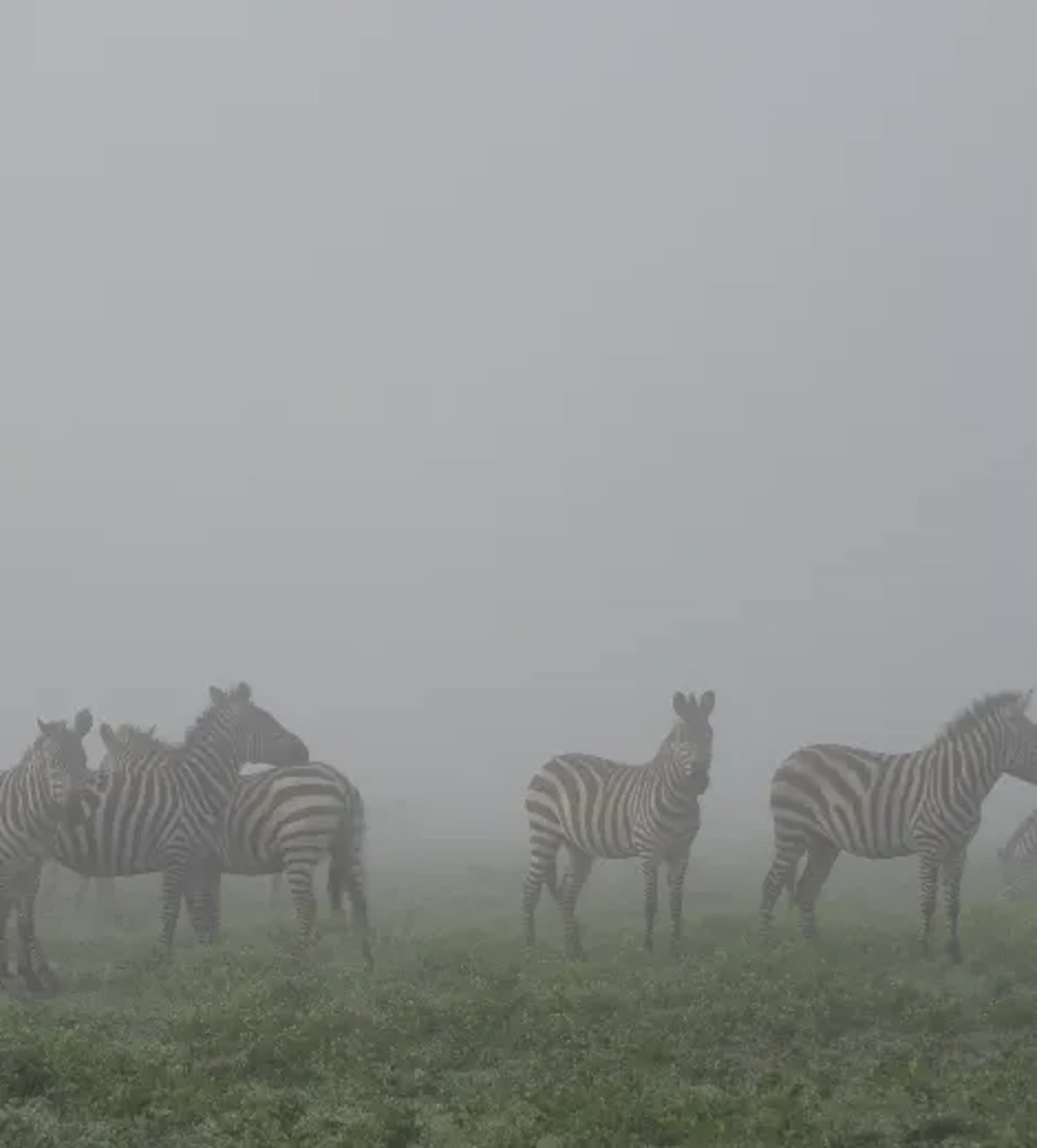
The Serengeti at first light

The Serengeti at first light. Most of the moments worth flying twenty hours for are within an hour either side of sunrise — one of the reasons we never rush the pace.

04.

Principle

Lodges follow the animals.

We are independent of any lodge group, which means we book what fits your trip rather than what fills a contract. The same itinerary in March and the same itinerary in September will use different camps — because the herds have moved, and so should you.

Across the Northern Circuit we work with everything from rustic canvas camps to the most exclusive private concessions. Tier choices on our Accommodation page show the range. Within whichever tier suits you, lodge selection follows three rules in order: logistics first (does this property put you where the wildlife will be); character second (does it feel like the kind of place that earns its rate); brand recognition last.

05.

Principle

Pace is part of the design.

A safari rushed is a safari missed. We aim for two-night stays at every property wherever the routing allows — one-night stops mean half a day in the vehicle and half a day unpacking, which never feels like a holiday.

The day you did the least is often the day you’ll remember the most.

We build in a slow morning here, a long mid-day at the pool there, a short walk near camp instead of a third game drive. The good moments — the ones you’ll remember in five years — tend to come when nothing is forced.

06.

Principle

One safari, one team.

The driver-guide who meets you at Kilimanjaro is the same person who pulls into your last lodge ten days later. Continuity matters: by day four your guide already knows what sets you off the bench in the vehicle and what makes you want to sit a little longer. That relationship is the single biggest factor in how a safari feels.

Behind the guide sits our Arusha office, reachable seven days a week through your whole trip. You’re never passed between desks, never re-explaining your itinerary to someone new. We treat the planning of these trips as an art form — the responsibility of someone putting their once-in-a-lifetime experience in your hands is not lost on us.

Ready when you are

The next move is drafting yours.

Tell us your dates, the people coming with you, and the kind of safari you have in mind. We’ll come back with a first pass on your itinerary — usually within forty-eight hours.