If you have read one guidebook about northern Tanzania, you have read the line: Lake Manyara is famous for its tree-climbing lions. Sometimes it is the first sentence on the park’s page. Sometimes it is the only sentence. It is also, on inspection, one of the most misleading single facts in safari literature. Lions in Lake Manyara do climb trees. They are not the only lions that do, they are not even particularly easy to see doing it, and the famous photographs everyone has in their heads were taken in a window of about a decade in the middle of the twentieth century. The story is worth correcting because the rest of Manyara is so much better than the cliché suggests.
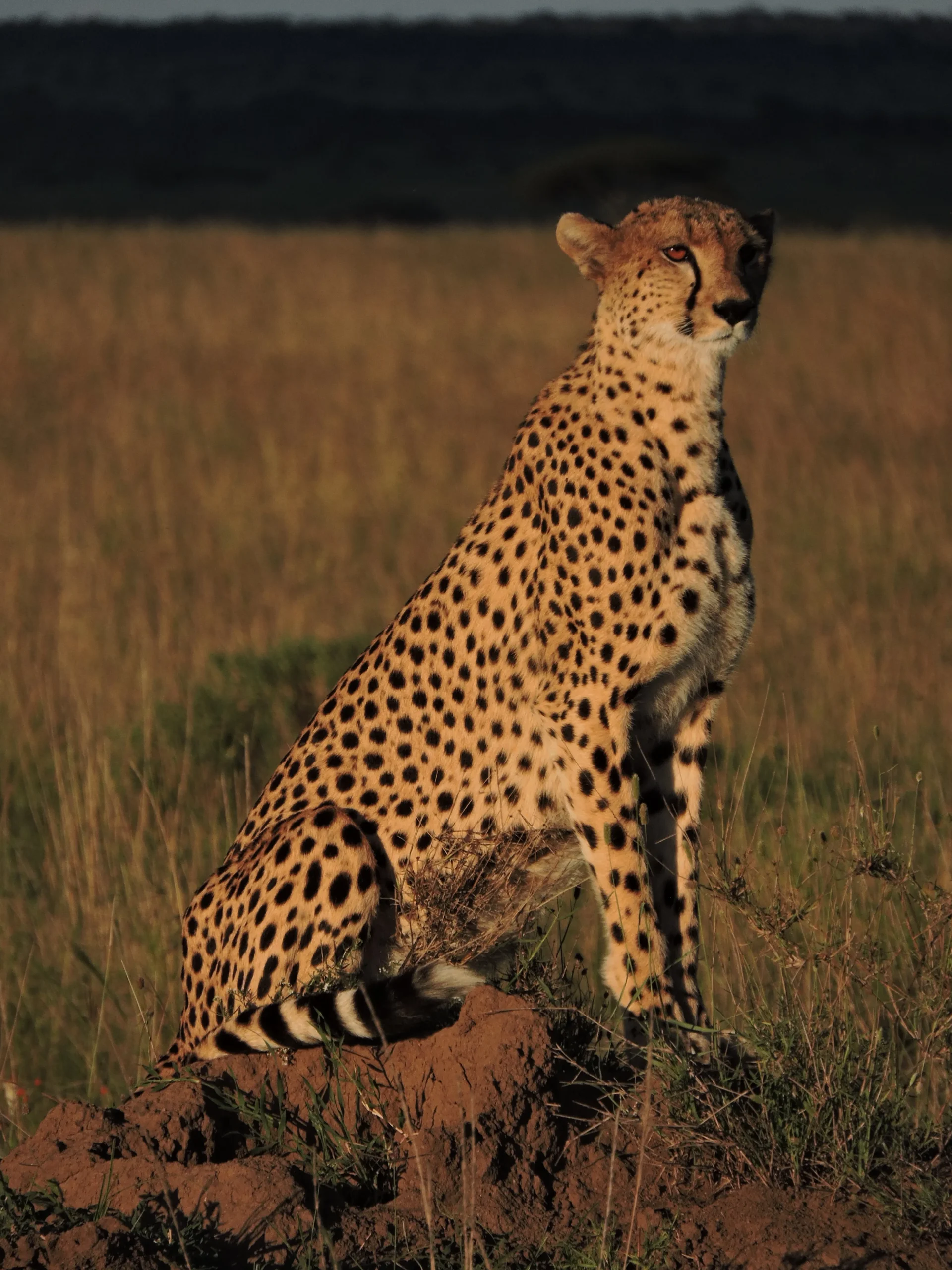
Lions climb trees in the Serengeti. They climb trees in Tarangire. The behaviour shows up wherever there is something annoying about being on the ground — tsetse flies, mud, hot earth — and a flat-canopied tree wide enough to lie along. There is nothing about Manyara’s geography that makes the behaviour distinctive. What there is, in Manyara’s acacia woodlands, is one or two well-photographed lions in the 1960s and a writer who needed a hook. The hook held.
If you want to see a lion in a tree, go to the Serengeti. If you want to see what makes Manyara worth a morning, look down at the lake.
The lake itself, and the algae.
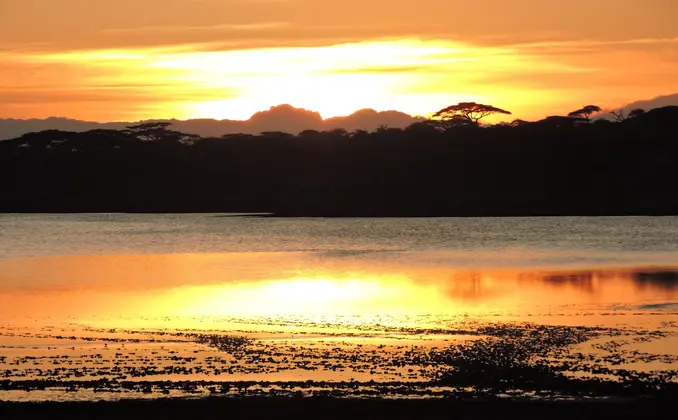
What is actually distinctive about Manyara is the lake. It is alkaline, fed by springs from the rift wall above, with no outlet — everything that flows in stays in, until evaporation concentrates it into something close to salt. That alkaline broth is exactly what a particular blue-green algae loves, and the algae is exactly what the flamingos eat. The pink layer you see hovering above the lake on a still morning is not a quirk of light; it is a food chain working at speed. Greater flamingo, lesser flamingo, pelican, fish eagle, kingfisher, stork. Three hundred bird species in a park you can cross in an hour.
The forest at the gate.
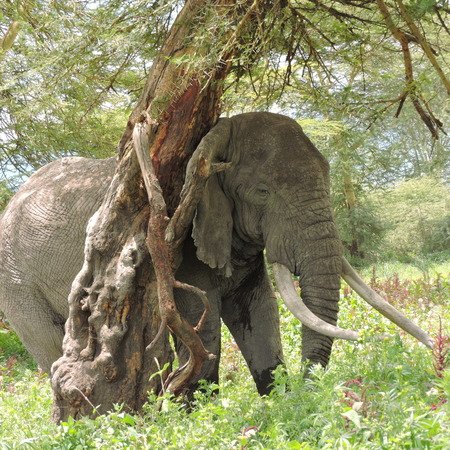
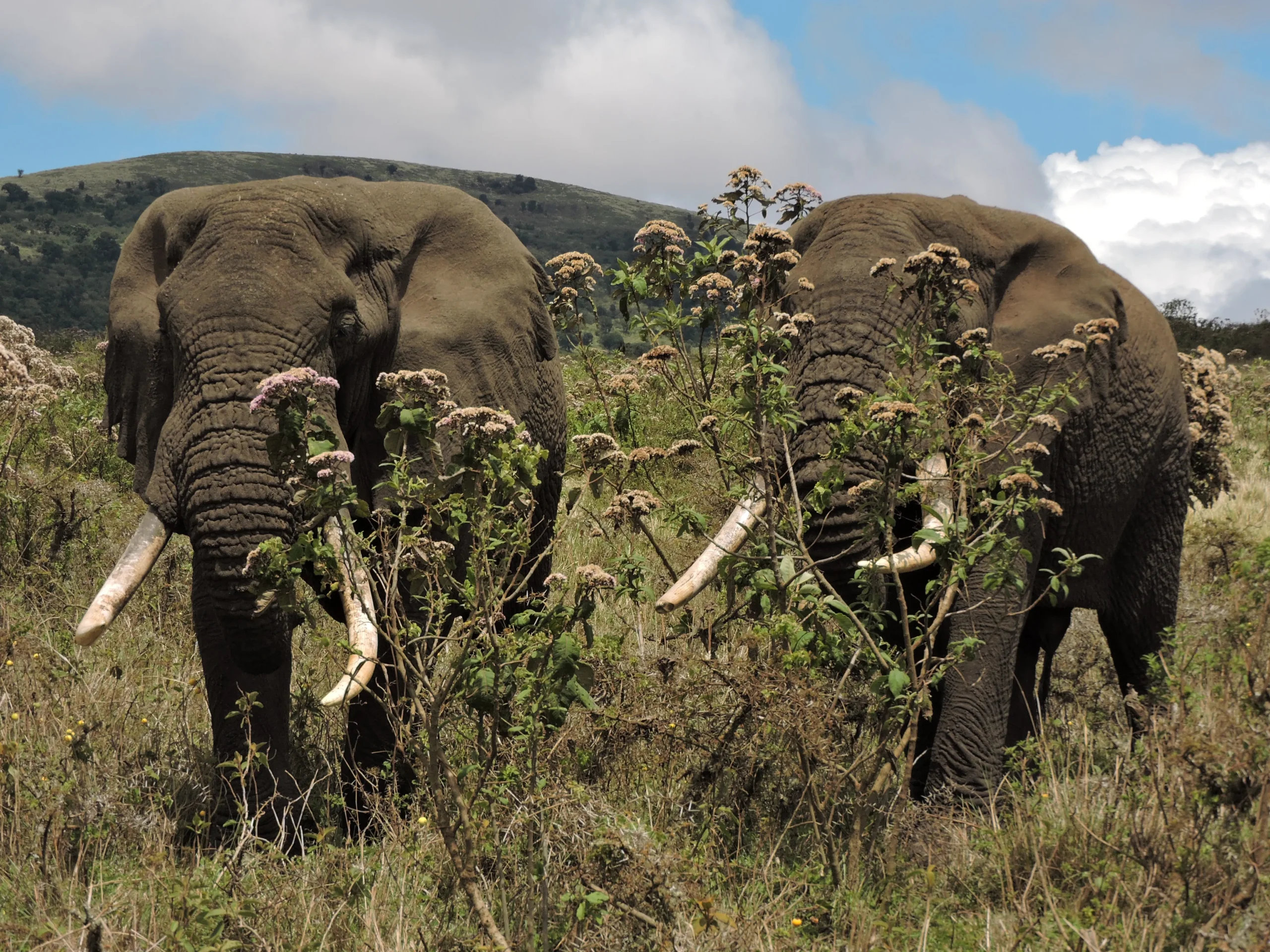
The other surprise in Manyara is the groundwater forest you drive into the moment you pass the gate. It looks nothing like the rest of the Northern Circuit — tall figs, mahoganies, blue monkeys overhead, water everywhere underfoot — because the rift wall above the park leaks the rain it catches in a slow underground river that surfaces here. Elephants love it. Baboons own it. A small troop will sometimes block the road for ten minutes while one female grooms another in the middle of the track and her cousin steals fruit from a stall.
Half a day, not three.
Be honest with us about Manyara. A half day is right for most travellers; some people, especially birders, want a full day and they get rewarded for it. But it is a park to fold in, not to build an itinerary around. The standard pattern is to drive through it on the way up to the crater rim, which puts you on the lake at midday with the light flat and the lions sleeping. Pushing the visit earlier — an overnight at Manyara, in for an early gate — trades a complicated logistic for a much better morning.